The independent file on technology, travel & lifeFrom Pakistan, for everywhere
Huzi Blogs.
The ArchiveSectionsSearch

Planning a trip? HTG Travels — flights, visas, hotels & Umrah, handled properly.

WhatsApp +92 317 5054959
Huzi Blogs.

An independent file on technology, travel and life — long-form guides written plainly, from Pakistan, for everywhere.

ShopMeet the Creator

Sections

  • Travel
  • Technology
  • Lifestyle
  • Programming
  • Sports
  • Linux
  • All sections

The Desk

  • The Archive
  • Search the file
  • Disclaimer & Data Privacy Policy
  • A project of huzi.pk

© 2026 blogs.huzi.pk — All rights reserved.

Set in Playfair Display & Inter

    HomeTravelStory
    Travel

    Praying in Riyadhul Jannah as a Woman (2026–2027): The Rawda Permit File — Nusuk Slots, Batch Releases, and the Window Between Ziyarat and Disappointment

    H

    By Huzi

    File #1203 · 4 min read

    Every Pakistani woman travelling with an Umrah group asks the same Madinah question — how do we actually get inside the Rawda? Not the fiqh of the Garden of Paradise, but the permit mechanics. The sisters' version of the Madinah rhythm runs through one booking screen, and this file decodes it.

    The quick answer: the Rawda permit is free, booked through the official Nusuk app — slots are released in batches, one to two weeks ahead, and they fill fast; the "fully booked" screen is usually a batch-timing problem, not a permanent closure, because cancelled slots reappear during the day; women's entry runs through separate doors and separate timing windows from the men's; and the sister without a permit is not empty-handed — the courtyard, the outer dua spots, and the Baqee salam windows (open after Fajr and after Asr, roughly 15–20 minutes each, women offering salam from outside the boundary) remain fully hers. Below, the file.

    The Nusuk Booking, Step by Step

    The permit lives inside the app most pilgrims already carry — the Nusuk platform that runs the Umrah ecosystem itself:

    • Install the official Nusuk app, register, sign in — the same account that books Umrah permits serves the Rawda request.
    • Open the Prophet's Mosque services section, select the praying-in-the-Rawdah service, pick date and slot, confirm.
    • The permit is free — any "service fee" quoted by a third party for the permit itself deserves scrutiny; the ziyarat guide's permit-decoding section covers the wider ziyarat ecosystem.

    The Batch Logic — Why "Fully Booked" Keeps Appearing

    The single most misunderstood mechanic: slots are released in batches, typically one to two weeks ahead of the visit dates, and each batch drains within hours. The app's "fully booked" is therefore a snapshot of a drained batch, not a verdict on the month. The practical consequences:

    • Book before you fly — the family that waits for Madinah arrival to request the permit usually meets a drained batch; the first hour in Madinah is for the salam, not for slot hunting.
    • Re-check during the day — cancelled permits reappear as the day passes; the patient checker wins the slot the impatient one surrendered.
    • The 7–14 day window is the plan's spine — fix the Madinah dates early precisely because the permit's own horizon is short.

    The Women's Doors and Windows

    • Separate entry — women enter the Rawda through their own designated doors on their own timing windows; the group that plans "everyone together" meets the schedule's reality at the barrier.
    • The modesty mechanics — the women's queue moves under supervision into the Rawda's designated area; the two rak'ahs inside are the visit's purpose, unhurried and short.
    • The Baqee salam windows — after Fajr until late morning and again after Asr, roughly 15–20 minutes each; women offer salam from outside the boundary, which is a complete, accepted visit, not a consolation version of one.

    Without a Permit — What Still Belongs to the Sister

    • The courtyard dua — the Prophet's Mosque's own reward is not gated behind any permit; forty prayers in the mosque is the Madinah promise itself.
    • The outer Rawda area dua — the nearness the permit measures is physical, not spiritual; the dua made from the courtyard carries the same distance to heaven's hearing.
    • The women's packing file — the prayer-dress layer that makes the Rawda queue's long waits bearable is packed in Karachi, not improvised in Madinah.

    The Mistake That Costs the Slot You Already Had

    The permit dies quietly in three ways: the no-show (a booked slot unused blocks nothing but your own rebooking), the phone problem (a dead battery at the door, no screenshot saved), and the batch-blind rebooking (requesting a new date while holding a live one, losing both in the shuffle). The phone-discipline file carries the mosque-phone etiquette the Rawda queue shares; the connectivity guide keeps the app itself alive on Saudi data.

    The desk that books the permit before the family flies — slot watched across the batch releases, doors and windows on the day-plan — HTG Travels puts the Rawda mechanics in the written client guide no other agency provides — WhatsApp +92 317 5054959.

    Gaza's women measure their own nearness to paradise's gardens — the Rawda's radius rebuilt as graves dug by the thousands in grounds their grandmothers prayed in, mothers who bury children and still raise their hands in dua over the soil; may Allah count every Gaza mother's dua at the boundary of her loss as the Rawda's own prayer, and plant her children where the ground is gentle. Sudan's women queue for a different permit — the pass through a checkpoint that lets them gather water and wounded in the same trip, the gate that decides if their family's day ends in a basin or a body-bag; may Allah open for Sudan's women every gate their survival waits behind, and end the era when a permit to walk out of a camp is harder than a permit to walk into a garden.

    Presented by

    HTG Travels — Plan the Trip, Skip the Runaround

    Flights, visas, Umrah packages and Hunza–Skardu tours, handled end to end from our licensed Sialkot desk. Real fares, hotel names in writing, and a human who answers — before you pay a rupee.

    Flights & rebooking Visa files Umrah 2026–27 Northern tours
    Visit huzi.pkWhatsApp +92 317 5054959

    Sialkot, Pakistan · Licensed agency · Fast quotes on WhatsApp


    You Might Also Like

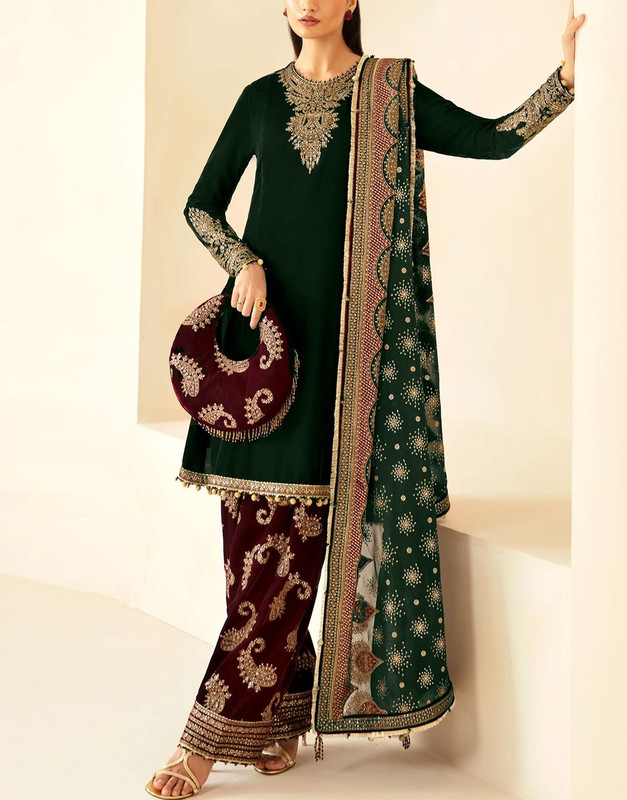
    Handwork Heavy Embroidered Organza Party Wear Dress | Unstitched Suit

    Handwork Heavy Embroidered Organza Party Wear Dress | Unstitched Suit

    PKR 6650

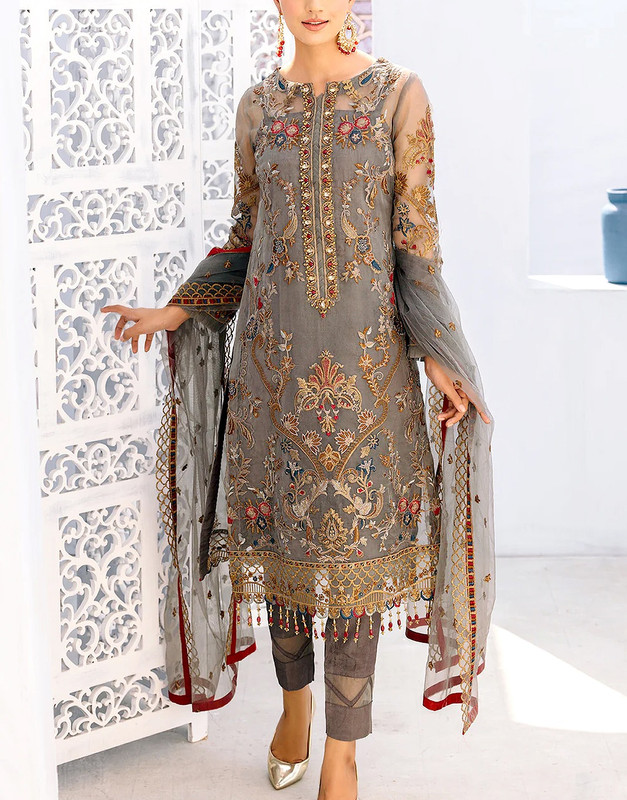
    Handwork Embroidered Organza Party Suit 2026 | Net Dupatta & Tassels

    Handwork Embroidered Organza Party Suit 2026 | Net Dupatta & Tassels

    PKR 5550

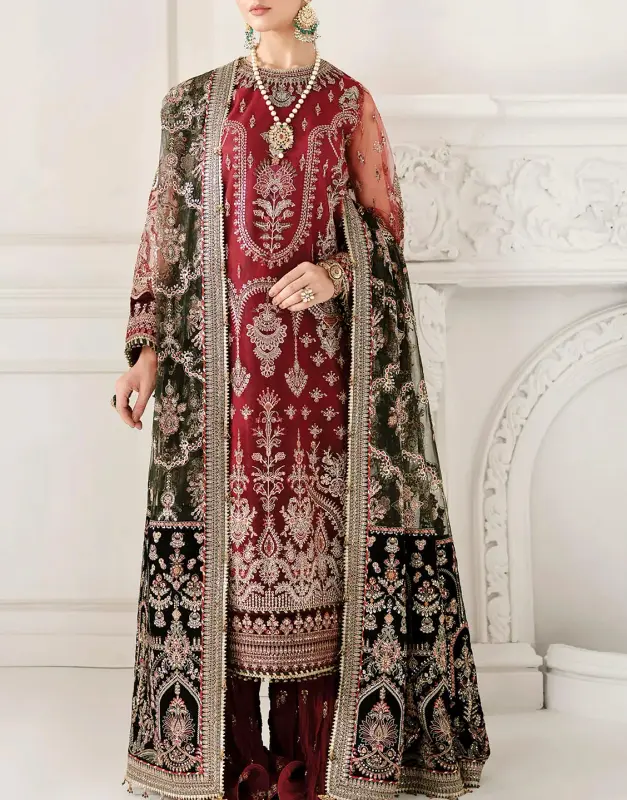
    Formal Embroidered 9000 Micro Velvet Party Wear Suit 2026 | Emb. Silk Trouser

    Formal Embroidered 9000 Micro Velvet Party Wear Suit 2026 | Emb. Silk Trouser

    PKR 8800

    Glamorous Heavy Embroidered Net Bridal Suit 2026 | Tassel Daman

    Glamorous Heavy Embroidered Net Bridal Suit 2026 | Tassel Daman

    PKR 9400

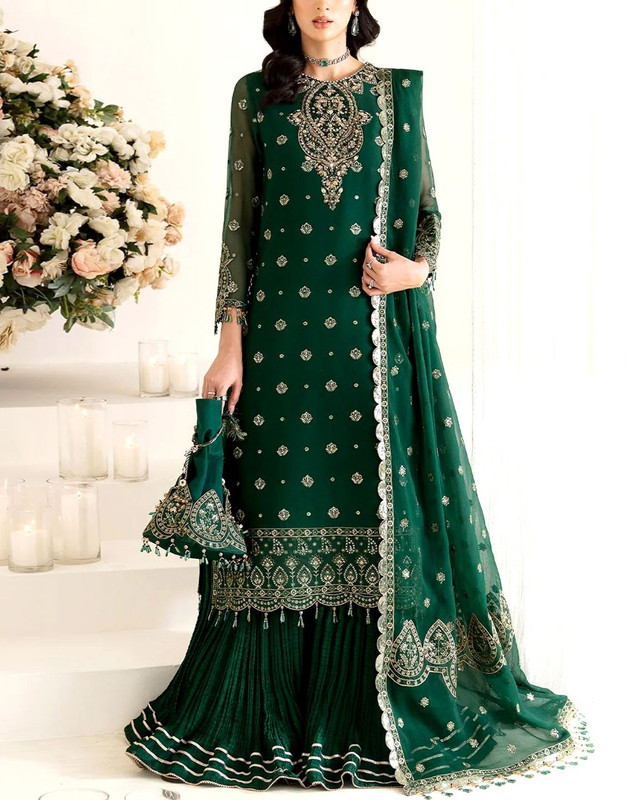
    Heavy Embroidered Formal Chiffon Suit | Silk Gharara Trouser

    Heavy Embroidered Formal Chiffon Suit | Silk Gharara Trouser

    PKR 7550

    Keep reading

    Related files

    Travel
    English

    Women's Dress at the Two Holy Mosques (2026–2027): The Abaya Reality File

    The question every Pakistani family group chat asks before an Umrah trip — abaya zaroori hai ya nahi? — gets an honest, sourced answer in this file for 2026–2027. The two-layer reality: on Saudi streets the abaya stopped being a legal requirement years ago, but inside the Two Holy Mosques the standard returns to the traditional one — loose, opaque, full covering with a scarf, which is why the Haramain is its own dress category. The evidence women are rarely shown: the Quran's own command to take your adornment at every mosque, the hadith that the prayer of a mature woman without a head covering is not accepted, the 'clothed yet naked' warning against tight and transparent fabrics, and the prohibition on perfume in the mosque. The Pakistani wardrobe advantage — shalwar kameez, loose kurtas and a pinned dupatta already pass, while fitted stretch fabrics and transparent lawn without layering quietly fail. The packing arithmetic: two to three abayas or modest sets on a rotation, the laundry math of a ten-day trip, dark colours against Zamzam splashes, the pin-box, the prayer dress for mosque stops, and the two-scarf rule. Women in ihram: ordinary modest clothes with no required colour, the fitted niqab prohibited with the majority ruling and the draw-aside cloth permitted when men pass, gloves off, socks on. Madinah and the Rawdah run on the same standard. What to check before you pack — and what to stop worrying about.

    By HuziFile #838

    Read
    Travel
    English

    Calling Home From Saudi Arabia: The Umrah Family's Phone File (2026–2027)

    "Line clear hai?" — the question every family WhatsApp group types within an hour of the plane touching Jeddah. This is the calling-home file most Pakistani Umrah families never get: the honest phone stack for two weeks in Makkah and Madinah, built before the flight instead of improvised at midnight from the hotel lobby. What actually happens to a live call in the Kingdom — why internet calls over mobile data have long sat in a grey zone, connecting on some networks and stalling on others, and why the plan that treats them as a bonus, never the backbone, is the plan that works. The layers that never depend on a live call: texts that arrive in seconds, the voice notes that ride the same lane as photographs, the ordinary international minutes that still outperform every clever workaround, and the hotel-wifi video call booked into the evening like a prayer slot. The elder's phone prepared at home — the charging discipline, the missed-call code that means "we reached, sab theek hai" without spending a riyal, the group named so a trembling thumb finds it. The daily rhythm — one fixed two-minute call and a stream of photos — that keeps the whole family calm on both sides of the flight.

    By HuziFile #903

    Read
    Travel
    English

    The Ladies Section File (2026-2027): Where Women Actually Pray in the Two Holy Mosques

    Ask a Pakistani family where the women pray in the Haram and the honest answer is usually a shrug — the ladies section is treated as folklore, passed between aunties, never written down. The reality is more practical than folklore: the Grand Mosque runs on flexible zoning, with women's sections marked out by movable partitions, staffed by female attendants, expanding and contracting with the prayer cycle — fuller at peak, wider after congregations disperse, stretched across the upper floors and the King Abdullah Expansion where the escalators do the climbing. Madinah's mosque keeps its own women's areas, with designated spaces for the five prayers and Rawdah visits running on the Nusuk permit system. And there are gates that belong to women — including a ladies-only entry and ziyarah-specific gates that open in windows after Fajr and after Isha — though gate designations are re-assigned by season, so the board at the gate outranks last year's screenshot. This file explains how the zoning actually works, which gates a woman should know, the split-and-reunite plan every family with a grandmother should agree on before entering, and how it all connects to travelling without a mahram, the abaya dress reality, and the menstruation rules that decide which prayers are owed and which are paused. Baji, ladies gate kahan hai — yeh sawal Haram ke andar se aaj bhi sab se zyada poocha jata hai.

    By HuziFile #869

    Read
    Travel
    English

    Finishing the Quran in the Haram (2026–2027): The Khatam File

    Almost every Pakistani pilgrim says it on the flight out — khatam kar ke aunga — and almost nobody plans it, which is why most trip-khatams die quietly on day three somewhere in Surah Nisa. The khatam file for 2026–2027 fixes that: the honest arithmetic of a full Quran finished inside the Haram — twenty pages a day for a ten-day stay, ten a day for fifteen, and the reason the seven-day khatam belongs to fast readers only. The Madani mushaf's 604 pages and thirty ajza turned into a daily schedule that survives the trip's real interruptions — the Nusuk permit hours, the tawaf windows, the Jumuah crowds — anchored to the two reading stretches that always exist: the post-Fajr hour and the pre-sleep hour. Where to sit: the expansion wings and courtyard edges where the crowd never steps over you, the upper floors with their longer benches and calmer air, and the spots that die the moment a prayer wave empties through them. The mushaf or the phone — both valid, both with their own discipline, the wudu requirement for touching the mushaf's pages, the pocket Quran as the object pilgrims keep for life, and the reading stand. Reading for those who cannot travel — completing a khatam and gifting its reward to deceased parents — and the dua at completion: what to ask when the last page turns, why the Sunnah's answer is to begin again from Al-Baqarah, and what the Quran itself promises the one who finishes and starts once more.

    By HuziFile #842

    Read
    Travel
    English

    Madinah Ziyarat 2026–2027: The Free Nusuk Rawdah Permit

    The sites guide Umrah posts never give you: the free Rawdah permit through Nusuk (slots drop around Fajr every Thursday), women-only timing windows, the men-only Baqee reality, Quba's 3.5 km taxi math, museum tickets in riyals and the Ajwa prices that separate the wholesale market from the Haram gift boxes.

    By HuziFile #654

    Read
    Travel
    English

    Can You Take a Loan for Umrah? The Honest Money File for Pakistani Families (2026–2027)

    "Umrah ka khwab hai, par paisa nahi — loan le lein?" — the question asked in every Pakistani drawing room, and the one most families answer wrong in both directions: either guilt-free personal loans at 20-plus percent mark-up, or years of postponing a journey the money was never meant to block. The honest file. The scholars' consistent position: Umrah is not obligatory on the one who cannot afford it, a riba loan can never fund it, and travelling for Umrah while holding a permissible debt is allowed only when repayment is not delayed. The vow problem — the nadhr spoken in a hospital corridor that changes everything. Then the halal funding ladder that actually works: purpose-built Islamic saving accounts — Meezan's Labbaik Mudarabah plans from six months to twenty years, Faysal Islami's travel saving products — the committee round the family already runs, the employer bonus and gratuity route, the asset-sale question, and the honest word about Islamic mutual funds and sukuk when the departure date is fixed and near. With the twelve-month table that turns intention into booking, and the dua of the one who arrives on halal money.

    By HuziFile #901

    Read
    Back to the archive