The independent file on technology, travel & lifeFrom Pakistan, for everywhere
Huzi Blogs.
The ArchiveSectionsSearch

Planning a trip? HTG Travels — flights, visas, hotels & Umrah, handled properly.

WhatsApp +92 317 5054959
Huzi Blogs.

An independent file on technology, travel and life — long-form guides written plainly, from Pakistan, for everywhere.

ShopMeet the Creator

Sections

  • Travel
  • Technology
  • Lifestyle
  • Programming
  • Sports
  • Linux
  • All sections

The Desk

  • The Archive
  • Search the file
  • Disclaimer & Data Privacy Policy
  • A project of huzi.pk

© 2026 blogs.huzi.pk — All rights reserved.

Set in Playfair Display & Inter

    HomeTravelStory
    Travel

    The Staying-Connected File (2026–2027): Nusuk Has Been Zero-Rated on Saudi Networks Since May 2026 — What That Does and Does Not Cover, the Visitor SIM Reality at Jeddah and Madinah Arrivals From SAR 31, the Travel-eSIM Play That Keeps Your Pakistani Number Alive for OTPs, and Why No Network Promises a Signal Inside a Packed Haram

    H

    By Huzi

    File #936 · 4 min read

    Since May 2026, an arrangement between the Ministry of Hajj and Umrah and Saudi telecom operators lets pilgrims reach Nusuk services — permits and the Nusuk Card — without consuming mobile data. It is the season's most useful connectivity fact, and the one most families misunderstand.

    The quick answer: the zero-rating covers the Nusuk platform only. Maps, WhatsApp, ride-hailing, translation and hotel apps still burn data normally. So build the stack in layers: the Nusuk app reachable even on an empty balance, a data layer that works from landing, and a home number that keeps receiving OTPs — the Pakistani side of which the eSIM and roaming guide already maps.

    The three layers in one table

    The layer The realistic option The honest price
    Permits, Nusuk Card Zero-rated Nusuk on Saudi networks Free of data charges
    Data for everything else Visitor SIM at arrivals, or eSIM installed at home SAR 31–104, or ~US$15–40
    OTPs and family calls Home SIM kept active, data roaming off Your normal plan

    The visitor SIM, honestly

    Counters at Jeddah and Madinah arrivals sell visitor prepaid packages — passport in hand, registration against your entry record, queues that scale with the season. The current visitor sheet runs from STC's Sawa Visitor 26 at SAR 31 for 6 GB and 60 minutes over 14 days to 21 GB for SAR 55, with Mobily's 55 GB / 30-day bundle near SAR 104 at the other end. STC carries the strongest inter-city coverage on the Jeddah–Makkah–Madinah triangle; Zain runs cheapest. Registration is identity-linked, so expect the counter to want the passport and possibly the border entry number, and budget queue time on arrival day.

    The eSIM play that wins the first hour

    A travel eSIM installed before departure connects the moment the plane lands — before passport control, before any counter, before the family scatters. On a dual-SIM handset the winning setup is boring and reliable: home SIM active for calls and OTPs with data roaming switched off, eSIM carrying the data. Ignore "free Umrah eSIM" offers — they are third-party marketing with tiny allowances built to upsell, not official programmes; there is no government-issued pilgrim eSIM. Budget roughly 5 GB for light use, 10 GB for navigation and photo sharing, 20 GB for video calls home.

    The part no network will promise

    Inside a packed Haram, at peak season, no operator guarantees a signal — hundreds of thousands of devices compete for the same cells. Plan for it the way the crowd-clock file plans for mataf density: offline maps downloaded, permits and the Nusuk Card screenshotted, and physical meeting points agreed by name and gate number — the Haram gates guide is the difference between a five-minute reunion and a lost hour. Elders travelling first time should have the hotel card in Urdu in their pocket, as the first-time flying file insists.

    Pro tip: zero-rated Nusuk is the safety net, not the plan — it keeps your permits alive when everything else fails, so screenshot every permit the day it is issued and the net never has to catch you.

    Saudi pohnch kar sab se pehla kaam: Nusuk app ka data free chalta hai — permit aur Nusuk Card bina balance ke khulte hain. Lekin WhatsApp, maps aur baqi apps ke liye alag data chahiye. Ghar se hi eSIM laga lein ta ke landing ke waqt internet mil jaye; Pakistani SIM OTP ke liye on rakhein, sirf us ka data roaming band kar dein. Haram ke andar bheed mein signal nahin hota — offline maps, screenshots, aur gate number par milne ka irada pehle tay karein.

    Connectivity is the right to say we are alive — Gaza's families know its loss, the occupier cutting telecom during assaults so the bombing happens in silence, families reduced to shouting names over rubble for a sign of life. Ya Allah, keep Gaza's voices reachable, break the blackouts that hide the killing, and let every family hear its missing again. Sudan's people know the same silence, networks dying with the power grid as the war moves city to city, a relative's last seen timestamp doing the work of news. Ya Rab, restore Sudan's lines and its peace, and let no family learn a death from a phone that stopped ringing.

    A connected Umrah is a calmer Umrah — and it is set up days before departure, not at the arrivals counter. We actually respond, twenty-four hours, no hidden charges, no unanswered messages — exclusive written guides for our clients, connectivity checklists included in every departure pack, and families known by name, never by file numbers. HTG Travels — WhatsApp +92 317 5054959.

    Presented by

    HTG Travels — Plan the Trip, Skip the Runaround

    Flights, visas, Umrah packages and Hunza–Skardu tours, handled end to end from our licensed Sialkot desk. Real fares, hotel names in writing, and a human who answers — before you pay a rupee.

    Flights & rebooking Visa files Umrah 2026–27 Northern tours
    Visit htg.com.pkWhatsApp +92 317 5054959

    Sialkot, Pakistan · Licensed agency · Fast quotes on WhatsApp


    You Might Also Like

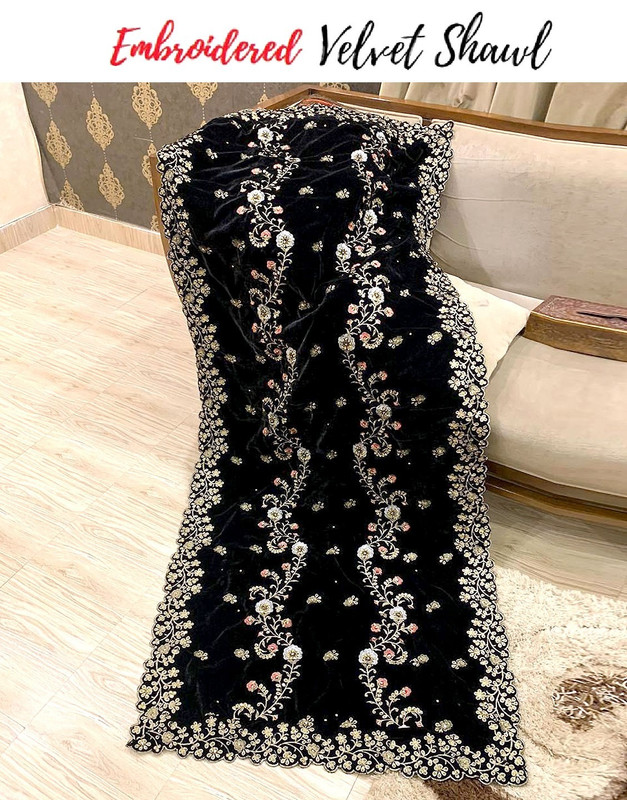
    Premium Heavy Embroidered Black Bridal Velvet Shawl | 4-Side Cutwork & Handwork

    Premium Heavy Embroidered Black Bridal Velvet Shawl | 4-Side Cutwork & Handwork

    PKR 5499

    Digital Print 90/70 Lawn Suit 3-Pc with Diamond Voil Dupatta (Unstitched)

    Digital Print 90/70 Lawn Suit 3-Pc with Diamond Voil Dupatta (Unstitched)

    PKR 3600

    Elegant Embroidered Lawn Suit 3-Pc (90/70) | Digital Print Organza Dupatta

    Elegant Embroidered Lawn Suit 3-Pc (90/70) | Digital Print Organza Dupatta

    PKR 4550

    Heavy Embroidered Lawn Suit (90/70) 3-Pc | Digital Print Diamond Zari Dupatta

    Heavy Embroidered Lawn Suit (90/70) 3-Pc | Digital Print Diamond Zari Dupatta

    PKR 5750

    Luxury Embroidered Lawn 3-Piece Suit with Heavy Daman & Printed Soft Chiffon Dupatta

    Luxury Embroidered Lawn 3-Piece Suit with Heavy Daman & Printed Soft Chiffon Dupatta

    PKR 4850

    Keep reading

    Related files

    Travel

    The NIMS Digital Polio Certificate File (2026–2027): Pakistani Airports Have Enforced the NADRA-Integrated Vaccination Certificate for Umrah Passengers Since 14 September 2026 — Karachi First, Then the Network — the Rs 100 Certificate, the Four-Week Dose Rule, the Twelve-Month Validity, Airport Emergency Counters for Urgent Departures, and What Still Separates It From the Meningitis ACYW Certificate

    Since 14 September 2026 Pakistani airports enforce the NADRA-integrated digital polio vaccination certificate for Umrah passengers, a rollout that began at Karachi and now shapes every departure: the paper vaccination card has become a supporting document while the NIMS-issued digital certificate — downloaded from nims.nadra.gov.pk or the Pak Vaccination Pass app for Rs 100 — becomes what check-in actually checks. This is the certificate file: why the dose must fall between four weeks and twelve months before departure, which vaccine counts, how overseas Pakistanis register doses taken abroad, why children travelling on B-Forms need their own record, the six-hours-early airport counter for urgent travellers, and why this certificate still does not replace the meningococcal ACYW certificate Saudi Arabia demands.

    By HuziFile #934

    Read
    Travel

    The Nusuk App's 2026 Rebuild (2026–2027): The AI Guide, the Digital Mutawwif That Counts Your Tawaf, Live Crowd Maps and Electric Cart Booking — What Pakistani Pilgrims Should Install and Learn Before Day One in Makkah

    "App download karna zaroori hai kya?" — every family group debates it before every Umrah, and the autumn 2026 answer is a proper yes. This is the app file for the rebuilt Nusuk. The scale first: the platform's own figures now run past 51 million users across 190 countries with more than 130 Hajj and Umrah services inside one login. The new layer that changes the walk itself: the Digital Mutawwif, a guide that knows where you are, counts your Tawaf and Sa'i circuits, and shows the dua for each stage; smart crowd management fed by sensors and cameras around the Grand Mosque; interactive maps that locate you, your campsite and the shortest path to services; an in-app AI religious guide answering in many languages; and electric cart booking for Tawaf and Sa'i directly through the app — quoted around SAR 100 for Tawaf, SAR 100 for Sa'i and SAR 200 combined, with children free — the paid mobility tier between the free disability services and full walking fitness. Underneath, the old rules still govern: one account per pilgrim on a personal mobile number, permits printed as PDFs, and a battery discipline no feature replaces.

    By HuziFile #884

    Read
    Travel

    The Elder-Companion Guide File (2026–2027): When the Package's Shared Mutawwif Is Not Enough for Your Parents — How Pakistani Families Arrange a Dedicated Urdu-Speaking Guide in Makkah and Madinah, the Honest Day-Rate Reality, What a Private Guide Actually Fixes Each Day and the Free Haram Services That Cover Half the Same Ground

    Every Umrah invoice carries a line that says "guide services" — one mutawwif shared across a whole coach of forty pilgrims. This is the file for the families whose father cannot walk the mataf unaided, whose mother reads no Arabic sign, whose elders' pace frightens even the group leader: the decision, the arrangement and the honest cost of a dedicated Urdu-speaking guide in the two holy cities. What the shared guide actually covers and what he cannot; what a private companion fixes daily — gates timed to the crowd clock, a steady arm through tawaf, the permit rebooked when a slot collapses, the Urdu phone call to the clinic desk; how the arrangement runs through your operator's licensed channels rather than a hotel-lobby promise; the day-rate reality stated plainly as a range and confirmed in writing before the flight; and the free half of the same ground — the Haram assistance desks, the electric carts, the digital mutawwif in the Nusuk app — that many families never need to pay past. Plus the reminder that travels with it: Gaza's elders led out of blast zones by their grandchildren, and Sudan's old people crossing borders with papers they cannot read.

    By HuziFile #905

    Read
    Travel

    The Fly Jinnah Saudi Network File (2026–2027): Pakistan's Budget Carrier Now Flies Karachi–Riyadh Daily Since October 2026 After Launching Three Weekly on 18 September, Dammam from 2 July, and Jeddah From Karachi, Islamabad and Lahore — The A320 Ancillary Math Families Should Do Before Comparing Fares

    Fly Jinnah is the low-cost door on the Saudi corridors: the airline's own newsroom confirms Karachi–Riyadh launched 18 September 2026 at three weekly (9P 610 departing Karachi 23:00) and grew to daily from October, Karachi–Dammam started 2 July 2026, and the carrier connects Karachi, Islamabad and Lahore with Jeddah, Dammam and Riyadh across an A320 fleet. This is the Fly Jinnah file: what a daily low-cost Riyadh service means while PIA's corridor there sits suspended, which side of its network serves Umrah families and which serves expat family visits, and the paid-menu, seat-pitch, ancillary arithmetic that decides whether the budget fare is really the cheaper ticket.

    By HuziFile #941

    Read
    Travel

    Pickpockets in the Haram (2026–2027): The Valuables File Nobody Hands You — Phones on Prayer Mats, the Ihram Pocket Problem, Cash Splitting, and What to Do in the First Hour After a Theft

    The most painful sentence a pilgrim writes home is not about crowds or heat — it is 'my phone was taken inside the Haram.' The reality file: the documented arrests of thieves working inside the Grand Mosque itself, and the three patterns they exploit — phones left on prayer mats, back pockets in the tawaf crush, bags handed to helpful strangers at the gates; the ihram problem, since two unstitched sheets have no zips, and the neck pouch and crossbody solutions that actually survive seven circuits at shoulder-to-shoulder density; the hotel-safe passport discipline and the copy you carry instead; how cash gets split across people and pockets so no single loss ends a trip; the first-hour sequence after a theft — Haram security posts and the lost property offices, the 911 call, the SIM and bank card blocks, and the embassy numbers saved before you flew; and the honest reassurance that Makkah is still one of the safest cities a Pakistani family will ever walk through, once the habits are right.

    By HuziFile #812

    Read
    Travel

    The Fifteen-Day File (2026–2027): Pakistan's Private Hajj Scheme Closes Its Books on 20 November 2026 — the Ministry's Deadline for Selecting and Paying for Packages, the App-and-Portal-Only Rule With Its Warning Against Paying Individuals, What Actually Separates One Package From Another on the Menu, the Order of Operations for a Family Still Deciding, and What Missing the Date Means for the Hajj Year Itself

    Two clocks ran this Hajj season and one has already stopped. This is the private-scheme file for Pakistan's still-deciding families: the Ministry of Religious Affairs setting 20 November 2026 as the deadline for selecting packages and completing payments under the Private Hajj Scheme 2027, every step running only through the Pak Hajj app and the Hajj Portal, the Ministry's explicit warning that pilgrims must not pay individuals or companies directly, the menu the season opened with — sixteen packages and more than 71,000 allocated private seats on the Ministry's digital portals — and what genuinely separates the options (duration tiers, Madinah-first versus Makkah-first routing, Maktab tiers and hotel categories, the e-contract that should match what was selected), the fortnight's real order of operations from passport validity and CNIC through what deliberately waits until later, the government-scheme comparison whose own instalment window closed on 20 October, and the multi-year waiting-list door the 2027–2030 policy keeps open for families who miss this one.

    By HuziFile #924

    Read
    Back to the archive