The independent file on technology, travel & lifeFrom Pakistan, for everywhere
Huzi Blogs.
The ArchiveSectionsSearch

Planning a trip? HTG Travels — flights, visas, hotels & Umrah, handled properly.

WhatsApp +92 317 5054959
Huzi Blogs.

An independent file on technology, travel and life — long-form guides written plainly, from Pakistan, for everywhere.

ShopMeet the Creator

Sections

  • Travel
  • Technology
  • Lifestyle
  • Programming
  • Sports
  • Linux
  • All sections

The Desk

  • The Archive
  • Search the file
  • Disclaimer & Data Privacy Policy
  • A project of huzi.pk

© 2026 blogs.huzi.pk — All rights reserved.

Set in Playfair Display & Inter

    HomeTravelStory
    Travel

    The Tawaf Landmarks File (2026–2027): the Black Stone Line, Hijr Ismail, Rukn al-Yamani and the Multazam — What to Actually Do at Each Point, Without Shoving Anyone

    H

    By Huzi

    File #822 · 4 min read

    Seven circuits, four landmarks, one green light. Most pilgrims learn the number on day one and the names on day three.

    The quick answer: every circuit starts and finishes at Hajar al-Aswad, marked by the green light — greeted with istilam: face the Stone, raise your hands with a takbir, touch or kiss it only when reachable without harm. Your circuit must go around the Hijr Ismail, the low semicircular wall — it is Kaaba ground, and cutting across it breaks the circuit. At Rukn al-Yamani touch when easy, walk on when not; between Yamani and the Stone, the sunnah dua is the Quran's own: "Rabbana atina fid-dunya hasanah wa fil-akhirati hasanah wa qina 'adhab an-nar." The step-by-step walkthrough covers the whole rite — this file slows at the four landmarks.

    The Black Stone, without the shove

    • Istilam is the greeting, not a wrestling move. Face the Stone, raise your hands to your ears as in salah's opening, say the takbir, and touch or kiss it only if you arrive without harming anyone
    • The schools differ — Hanafi fiqh treats the salutation as an obligation where reachable without harm, the majority as sunnah — but no school authorises pushing, and the Stone line is where the mataf's injuries happen, as the crowd clock makes plain
    • If the crush is closed, gesture from where you stand — raised hand, takbir, keep walking; the Prophet ﷺ performed tawaf on camelback at distance
    • Wheelchair users greet from the outer ring — raised hand and takbir from the chair's line is complete istilam; the seniors' file maps the routes
    • Never send a child forward alone — the gap in the crush is not a children's entrance

    Hijr Ismail: the wall that is Kaaba

    The low curved wall northwest of the Kaaba is built on Kaaba ground — walk inside its open arc and that circuit has not counted. The dua pilgrims make there is beloved, but it is made after tawaf, entering the Hijr: two calm rakats or a hands-raised dua, then back to the line.

    Rukn al-Yamani: the corner without a crowd

    • You pass the Yamani corner on the far side before the Stone line
    • Touch it when your hand reaches without breaking stride; walk on when it does not — no kissing, no gesture, no stopping
    • Between Yamani and the Stone is the sunnah's dua stretch: "Rabbana atina..." — the Quran's own words, and enough

    The Multazam and the Maqam

    After the seventh circuit, two sunnahs remain. The Multazam is the wall between the Stone and the Kaaba's door — where the Prophet ﷺ pressed himself and made dua; often closed by marshals today, so approach when open and never fight for it — dua made from ten metres away reaches the same Lord. Then the two rakats of tawaf behind the Maqam Ibrahim, the glass enclosure where Ibrahim ﷺ stood — behind it when the mataf allows; when it does not, anywhere in the Haram. Then water, then the sa'ee floors for the next rite.

    The flow rules that keep the landmarks human

    1. Never reverse on the line — a dropped misbaha is not worth a counter-current collision
    2. Never stop walking in the flow — step out, finish the dua, rejoin
    3. Count at the green light, not by feel — the commonest tawaf error is the miscounted lap
    4. Keep dua simple — no prescribed litany per circuit; the Quran's dua and your own words are the sunnah. The ihram file keeps the state you perform this in from breaking quietly — and the farewell tawaf file asks the same of your last day.

    Tawaf ke chaar nishaan: Hajar al-Aswad — green light ke neeche — jahan har circuit shuru hota hai; Hijr Ismail jis ka chakkar zaroori hai kyunki woh Kaaba ka hissa hai; Rukn al-Yamani jahan haath asaani se lagaye to lagayein, warna aage barh jayein; aur Multazam jahan tawaf ke baad dua hoti hai. Black Stone door ho to takbeer ke saath ishara kijiye — dhakka kisi madhhab mein jaiz nahi, aur sawaab ka waada dhakke mein nahi hai.

    Gaza's families turn toward the same qiblah while Israel walls them off from their own olive groves, their wells, even their graves — Ya Allah, let every wall built on stolen land come down. And Sudan's displaced circle toward Makkah from borrowed ground while the RSF sits in their homes — Ya Allah, let those who seized houses never sleep in them, and bring their victims home to stay.

    Knowing the landmarks before you land is what a proper pre-trip brief gives you — in writing, before the crowd teaches you its lessons the hard way. We actually respond, twenty-four hours, no hidden charges, and our clients walk the rites through before the flight, not inside the mataf. HTG Travels — WhatsApp +92 317 5054959.


    Presented by

    HTG Travels — Plan the Trip, Skip the Runaround

    Flights, visas, Umrah packages and Hunza–Skardu tours, handled end to end from our licensed Sialkot desk. Real fares, hotel names in writing, and a human who answers — before you pay a rupee.

    Flights & rebooking Visa files Umrah 2026–27 Northern tours
    Visit htg.com.pkWhatsApp +92 317 5054959

    Sialkot, Pakistan · Licensed agency · Fast quotes on WhatsApp


    You Might Also Like

    2-in-1 Kitchen Knife & Board – Built-In Chopper, SS Blade, Non-Slip Base

    2-in-1 Kitchen Knife & Board – Built-In Chopper, SS Blade, Non-Slip Base

    PKR 1480

    Handwork Heavy Embroidered Organza Party Wear Dress | Unstitched Suit

    Handwork Heavy Embroidered Organza Party Wear Dress | Unstitched Suit

    PKR 6650

    Heavy Embroidered Lawn 3-Pc Suit | Digital Print Diamond Dupatta (Fancy Wear Pakistan)

    Heavy Embroidered Lawn 3-Pc Suit | Digital Print Diamond Dupatta (Fancy Wear Pakistan)

    PKR 4550

    Luxury Heavy Embroidered Fancy Lawn 3-Pc Suit | 4-Side Organza Dupatta & Tassels

    Luxury Heavy Embroidered Fancy Lawn 3-Pc Suit | 4-Side Organza Dupatta & Tassels

    PKR 6650

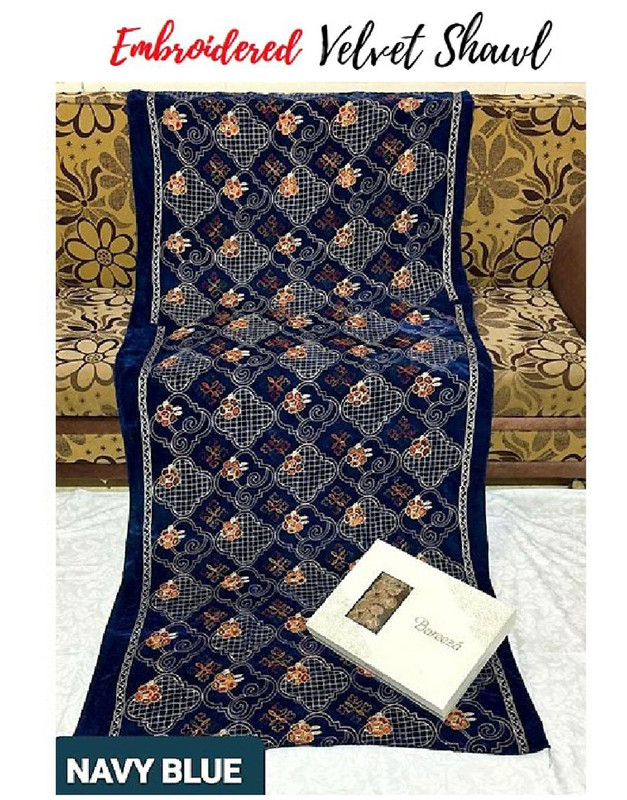
    Heavy Embroidered Navy Blue Bridal Velvet Shawl | 2-Side Handwork

    Heavy Embroidered Navy Blue Bridal Velvet Shawl | 2-Side Handwork

    PKR 4000

    Keep reading

    Related files

    Travel

    Pickpockets in the Haram (2026–2027): The Valuables File Nobody Hands You — Phones on Prayer Mats, the Ihram Pocket Problem, Cash Splitting, and What to Do in the First Hour After a Theft

    The most painful sentence a pilgrim writes home is not about crowds or heat — it is 'my phone was taken inside the Haram.' The reality file: the documented arrests of thieves working inside the Grand Mosque itself, and the three patterns they exploit — phones left on prayer mats, back pockets in the tawaf crush, bags handed to helpful strangers at the gates; the ihram problem, since two unstitched sheets have no zips, and the neck pouch and crossbody solutions that actually survive seven circuits at shoulder-to-shoulder density; the hotel-safe passport discipline and the copy you carry instead; how cash gets split across people and pockets so no single loss ends a trip; the first-hour sequence after a theft — Haram security posts and the lost property offices, the 911 call, the SIM and bank card blocks, and the embassy numbers saved before you flew; and the honest reassurance that Makkah is still one of the safest cities a Pakistani family will ever walk through, once the habits are right.

    By HuziFile #812

    Read
    Travel

    The Masa'a Floors File (2026–2027): Sa'ee Between Safa and Marwa Done Right — the Four Levels, the Green Lights Zone, Electric Carts, Strollers and the Exit Mistake That Costs Families an Hour

    Sa'ee is the only rite of Umrah that happens inside a building with floors, and nobody hands you the floor plan. The geography file — the covered gallery between Safa and Marwa, about 450 metres per circuit and a bit over three kilometres across seven laps; the four levels plus roof, all of them valid, with the calm sitting upstairs and the crush at peak sitting at the basement and ground; the green fluorescent lights marking the stretch where Hajar ran and the sunnah of light jogging for men between them; the electric cart hire on the Marwa side for pilgrims who cannot walk it and the wheelchair reality for elderly parents; where strollers actually work; how the lap-count actually gets kept; and the ending done properly — the exit doors, the two rak'ahs, and the walk to halq instead of the wrong-door detour that separates families inside the largest prayer building on earth.

    By HuziFile #811

    Read
    Travel

    The Umrah Dua File (2026–2027): The Duas That Are Actually Fixed, the Ones You Write Yourself, and Every Core Dua in Roman Urdu for Pakistani Pilgrims

    Most Pakistani pilgrims memorize the logistics and arrive at the mataf with empty hands. The complete dua file: which duas are authentically fixed — the talbiyah, the takbir at the Black Stone, the dua between the Yemeni corner and the Black Stone — and where you simply speak your own; every core dua in Roman Urdu with its meaning, the fake 'circuit-by-circuit' sheets to throw away, and why recording an elder's duas before the flight matters more than any packing list.

    By HuziFile #775

    Read
    Travel

    The Serving-Pilgrims File (2026–2027): Saudi's 'Be a Supporter' Volunteering Drive, What the Ramadan and Red Crescent Programs Actually Recruit, Why an Umrah Visa Is Not a Volunteer ID — and the Serving Every Pakistani Pilgrim Can Do Anyway

    Saudi Arabia has built a whole volunteering layer around the Two Holy Mosques — the 'Be a Supporter' initiative the national portal now actively promotes, Ramadan volunteer registration for the Grand Mosque and the Prophet's Mosque, Red Crescent drives for the Hajj season, and ministry packages of volunteer initiatives to serve pilgrims. This file separates what is structured from what is realistic for a Pakistani on a short trip: the formal programs largely recruit residents with local status, an Umrah visa is issued for worship and travel, and no platform will schedule formal shifts around a 30-day tourist-style stay. Then the half that needs no registration at all — pushing a stranger's wheelchair up the Masa'a ramp, translating for a lost pilgrim in a language the signs do not carry, water at the right hour, the crowd-moving help the mataf always needs — and the etiquette that keeps service sincere instead of performed. With the famous hadith on aiding Allah's servants, the free wheelchair services most families never claim, and the reason serving in the Haram outlasts every photograph.

    By HuziFile #820

    Read
    Travel

    How to Perform Umrah the First Time 2026–2027: Tawaf, Sa'i and Halq, Walked Through Step by Step

    The complete first-Umrah walkthrough for Pakistani pilgrims in 2026–2027 — where ihram actually begins at the miqat, how the seven anti-clockwise circuits of tawaf are counted from the green light line at the Black Stone, the two rakats at Maqam Ibrahim and the Zamzam that follows, the seven laps of sa'i between Safa and Marwa that stretch near three kilometres, and the haircut that ends ihram — plus the free Nusuk permit with its fixed time slot that every tawaf and sa'i now runs on, night-timing strategies against the Makkah heat and crowds, the mistakes that quietly cost pilgrims their Umrah, and a checklist that fits in one small bag.

    By HuziFile #733

    Read
    Travel

    Qasr Salah for the Pakistani Pilgrim (2026–2027): The Hanafi Traveller's File — the 15-Day Rule, Two Rakats Instead of Four, Praying Full Behind the Imam, and Combining Without Inventing Rules

    Pakistani pilgrims ask one fiqh question more than any other: how do I pray on this trip? The quick answer, in the Hanafi framework most Pakistani families follow: on a genuine journey beyond roughly 77 kilometres, the four-rakat fard prayers — Zuhr, Asr and Isha — become two rakats, Fajr is unchanged, Witr is never shortened, and the moment you intend to stay fifteen days or more in Makkah or Madinah you pray full again, because the 15-day rule is about intention, not tiredness. This file walks the arithmetic families get wrong — twenty-day stays prayed qasr out of habit, fourteen-night stays prayed full out of caution, separate counts for Makkah and Madinah — then the rules behind the imam (follow the imam's full prayer even in your qasr mindset), the honest Hanafi position on combining Zuhr with Asr (allowed in real travel need, not a convenience doctrine), sunnah prayers on the road, women's identical rules, and where the airport prayer halls, the Haramain train timetable and Jumuah fit into a day that already has five anchors in it.

    By HuziFile #821

    Read
    Back to the archive