The independent file on technology, travel & lifeFrom Pakistan, for everywhere
Huzi Blogs.
The ArchiveSectionsSearch

Planning a trip? HTG Travels — flights, visas, hotels & Umrah, handled properly.

WhatsApp +92 317 5054959
Huzi Blogs.

An independent file on technology, travel and life — long-form guides written plainly, from Pakistan, for everywhere.

ShopMeet the Creator

Sections

  • Travel
  • Technology
  • Lifestyle
  • Programming
  • Sports
  • Linux
  • All sections

The Desk

  • The Archive
  • Search the file
  • Disclaimer & Data Privacy Policy
  • A project of huzi.pk

© 2026 blogs.huzi.pk — All rights reserved.

Set in Playfair Display & Inter

    HomeTravelStory
    Travel

    Janazah Prayers at the Haram (2026–2027): How Pakistani Pilgrims Join the Funeral Prayers They Meet Every Day — Takbirs, Duas, and the Two-Qirat Reward

    H

    By Huzi

    File #835 · 4 min read

    The janazah prayer is the one salah Pakistani pilgrims meet every single day at the Haram — several times between two fard prayers — and the one they most often walk past, unsure whether their Hanafi upbringing permits them to jump in.

    The quick answer: yes, join. The prayer is four takbirs with no ruku and no sujud: takbir, then Surah al-Fatiha; takbir, then Salat al-Ibrahimiyyah; takbir, then the dua for the deceased; takbir, then the salam. Arrived late? Join at whichever takbir the imam is on and complete the remaining takbirs in order, without reciting what you missed. It takes under three minutes — and the Prophet ﷺ measured its reward in mountains.

    The prayer in one pass

    • First takbir — raise your hands (the Prophet ﷺ raised them with every takbir), then recite Surah al-Fatiha silently — Talhah (RA) recited it in janazah behind Ibn Abbas and told the rows it was the sunnah
    • Second takbir — recite Salat al-Ibrahimiyyah, the durood you already know from tashahhud
    • Third takbir — make dua for the deceased: Allahummaghfir lahu wa rhamhu
    • Fourth takbir — a short dua, then salam on both sides, following the imam as in every prayer

    No adhan, no iqamah, and no ruku or sujud anywhere in it. The rows face the qiblah, the bier before the imam.

    The proof you will be asked for

    • Four takbirs are the Prophet's own pattern — Abu Hurayrah (RA) reported the Prophet ﷺ said four takbirs over the Najashi janazah (Bukhari and Muslim)
    • The structure is the sunnah order — Fatiha, durood, dua, salam, preserved in the narration of Abu Imamah ibn Sahl, declared authentic by Ibn Hajar
    • The imam's position: at the head for a man, at the middle for a woman — Anas (RA) demonstrated both and traced both to the Prophet ﷺ

    Arriving late — the rule that unblocks the rows

    The rows move fast, and the answer is simpler than the hesitation: join at the takbir in progress, then complete the remaining takbirs in order after the imam's salam, without going back to the missed recitations. If you catch only the fourth takbir and the salam, take what you caught. The prayer is valid, the reward is yours.

    The reward, measured in mountains

    • "Whoever attends the funeral until the prayer has been offered will have one qirat, and whoever attends until the deceased is buried will have two qirats." — Abu Hurayrah (RA), Bukhari and Muslim. Asked what the two qirats were, the Prophet ﷺ said: "Like two great mountains" — each like Mount Uhud in Muslim's narration. The graveyard visit that follows burial has its own taught dua and etiquette — the Baqi file carries both
    • Ibn Umar (RA), hearing it confirmed by Aisha (RA), dropped the pebbles in his hand and said: "We have missed out on many qirats"
    • Forty worshippers who pray over a believer, associating nothing with Allah, are granted intercession for him (Muslim)

    At the Haram you cannot stay for burials, but the one-qirat prayer is offered to you several times a day, free of permits.

    Haram-specific etiquette

    • Shoes and bags go in your shoe bag before you join the row, not held in a hand mid-prayer — the footwear habit applies double at a janazah
    • Do not push through a formed row — rows close in seconds; stand at the back and start on the next takbir
    • Women may join in rows behind the men; the prayer is valid for them as it is for you
    • The bier may pass during your tawaf — do not break tawaf for it; the circuit has its own obligation, as the tawaf landmarks file explains
    • If the janazah comes while you sit in the courtyard, this is the congregation you did not plan for — the best kind

    Haram mein roz kai janazah parhne ko milte hain — chaar takbeer, na ruku na sajdah: pehle takbeer ke baad Fatiha, doosre ke baad durood, teesre ke baad mareez ke liye dua, chauthe ke baad salam. Beech mein aayein to jis takbeer par imam ho wahin shuru ho jayein, jo reh gaye woh imam ke salam ke baad poore kar lein. Ek qirat ka sawab pahad jitna hai — Bukhari aur Muslim ki sahi riwayat. Teen minute ki namaz, zindagi bhar ka hisaab.

    We line up for strangers' funeral prayers while Gaza's dead are buried by their families without washing, without shrouds, and sometimes without names — Ya Allah, receive those buried in haste exactly as You receive those buried in prayer. And Sudan's funeral rows stretch longer every year as the RSF's war grinds on, mothers burying sons in courtyards far from the homes the raids emptied — Ya Allah, gather them into the wide mercy they were denied on earth.

    A janazah file carried in the pocket — the takbirs, the duas, the late-joiner's rule — is what a proper pre-trip brief gives you in writing, before the bier arrives and the moment passes. We actually respond, twenty-four hours, no hidden charges, and our clients' families are taught every prayer of the journey, including the one they never planned for. HTG Travels — WhatsApp +92 317 5054959.

    Presented by

    HTG Travels — Plan the Trip, Skip the Runaround

    Flights, visas, Umrah packages and Hunza–Skardu tours, handled end to end from our licensed Sialkot desk. Real fares, hotel names in writing, and a human who answers — before you pay a rupee.

    Flights & rebooking Visa files Umrah 2026–27 Northern tours
    Visit htg.com.pkWhatsApp +92 317 5054959

    Sialkot, Pakistan · Licensed agency · Fast quotes on WhatsApp


    You Might Also Like

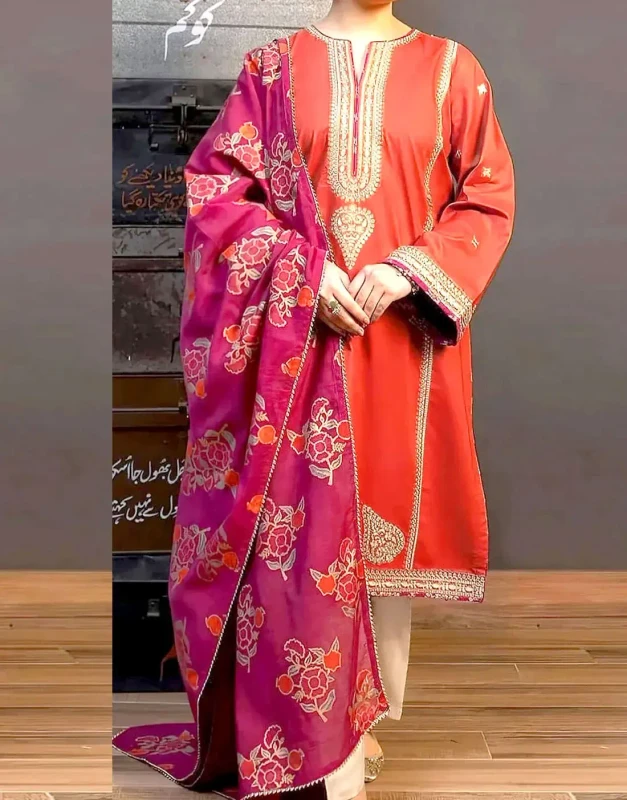
    Elegant Heavy Embroidered Organza Suit | Printed Organza Jacquard Dupatta

    Elegant Heavy Embroidered Organza Suit | Printed Organza Jacquard Dupatta

    PKR 5900

    Elegant Dhanak Winter Dress with Kotrai Shawl – Unstitched Embroidered Outfit for Casual & Formal Wear

    Elegant Dhanak Winter Dress with Kotrai Shawl – Unstitched Embroidered Outfit for Casual & Formal Wear

    PKR 4800

    Heavy Embroidered Velvet Suit | Printed Silk Dupatta & Jamawar Trouser

    Heavy Embroidered Velvet Suit | Printed Silk Dupatta & Jamawar Trouser

    PKR 5900

    2-Piece Scroll Embroidered Lawn Suit | Heavy Daman & Trouser Patches (2025)

    2-Piece Scroll Embroidered Lawn Suit | Heavy Daman & Trouser Patches (2025)

    PKR 3400

    Unstitched Digital All-Over Print Lawn 3-Piece Suit with Matching Lawn Dupatta

    Unstitched Digital All-Over Print Lawn 3-Piece Suit with Matching Lawn Dupatta

    PKR 3700

    Keep reading

    Related files

    Travel

    The Forty Prayers of Madinah (2026–2027): The Chalis Namaz File — the Hadith, the Honest Grading, the Eight-Day Arithmetic and How to Actually Catch Them

    Every Pakistani family in Madinah is chasing the same number — chalis namaz, forty prayers in the Prophet's Mosque — and almost none of them know where the number comes from, what counts, or whether their travel status breaks it. The forty-prayers file for 2026–2027 settles all of it: the narration itself — whoever prays forty prayers in the Prophet's Mosque without missing one, an exemption from the Fire and salvation from punishment — with its honest grading, graded hasan by some scholars and weaker by others, so the practice rests on ihsan rather than guaranteed arithmetic. The counting rules: forty fard prayers with the congregation, five a day, eight days — the deliberate Madinah stay that turns a two-night stopover into a residency; whether the sunnahs count (they do not, on the strict count); the opening takbir discipline the stricter reading adds; and how qasr interacts — the traveller prays in full behind the resident imam and the count still holds. The Rawdah salam etiquette folded into the rhythm — the quiet salam at the Prophet's ﷺ grave, the lowered voice, the exit toward prayer, never the exits toward the shops. The thousand-fold multiplication the whole plan rides on — one prayer in this mosque equaling a thousand elsewhere — and the honest note that the reward belongs to Allah's generosity, not our calculators. The itinerary math, the hotel-side logistics, and what a family does when it cannot stay eight days.

    By HuziFile #844

    Read
    Travel

    Praying Behind the Imam in the Haram (2026–2027): Joining Late, the Screen Rows, Tawaf When the Iqamah Goes, and the Congregation Mistakes Pakistani Pilgrims Keep Making

    A million people, one imam, and a voice that reaches further than any congregation in history — yet the fiqh questions Pakistani pilgrims whisper are always the same five. This is the congregation file, answered plainly: what to do when you catch the imam halfway through (the Prophetic rule — pray what you caught, complete what you missed, and do not rush the salam), whether the courtyard and roof rows following giant screens and loudspeakers count at all (they do, and have for decades), what happens when the iqamah goes while you are mid-tawaf (pause the circuit, join the jama'ah, resume where you stopped), the traveller's question — whether qasr applies behind the Haram's resident imam or you pray in full like everyone around you — and why intention-switching mid-prayer is the debate you can leave at home. Plus the row etiquette that keeps the mataf flowing: never block the circuits to pray, walk behind those still in salah, and close the gaps shoulder to shoulder the way the adhan itself instructs. School-specific nuances belong with your own mufti — this is the working field guide for the marble.

    By HuziFile #815

    Read
    Travel

    The Umrah Dua File (2026–2027): The Duas That Are Actually Fixed, the Ones You Write Yourself, and Every Core Dua in Roman Urdu for Pakistani Pilgrims

    Most Pakistani pilgrims memorize the logistics and arrive at the mataf with empty hands. The complete dua file: which duas are authentically fixed — the talbiyah, the takbir at the Black Stone, the dua between the Yemeni corner and the Black Stone — and where you simply speak your own; every core dua in Roman Urdu with its meaning, the fake 'circuit-by-circuit' sheets to throw away, and why recording an elder's duas before the flight matters more than any packing list.

    By HuziFile #775

    Read
    Travel

    Nafl Tawaf and Tahiyyat al-Masjid (2026–2027): The Voluntary Worship File — the Welcome Tawaf, Nightly Circuits and Tawaf for Parents Who Cannot Travel

    Between the fard prayers and the hotel lifts, the Grand Mosque offers the worship most Pakistani families never schedule — the voluntary circuits that cost nothing and are the trip's quiet treasure. The voluntary worship file for 2026–2027: tahiyyat al-masjid, the two rak'ahs the Prophet ﷺ taught for every mosque entry, no exception for the Haram — and how a fresh tawaf on arrival serves as the Haram's own greeting. The nafl tawaf rules in full — seven circuits, no ihram, no Sa'i, no halq, no fixed hour, valid for anyone in the Haram at any time, and the Hanafi ruling that makes the two rak'ahs after every tawaf — fard or nafl — a wajib, not a decoration. Tawaf for those who cannot travel: the Hanafi validity of nafl tawaf on behalf of deceased parents and living parents too ill to fly, and how it differs from the delegation rules a full Umrah-badal carries. The nightly rhythm that beats the day-one enthusiasm trap — one unhurried tawaf a night across the stay rather than five back-to-back circuits the first evening — timed against the crowd clock's quiet windows. The etiquette that keeps the mataf moving: never blocking lanes to pray, never walking through a praying row, phones down, and the wheelchair-tawaf that counts for the pusher's parent as well.

    By HuziFile #841

    Read
    Travel

    Finishing the Quran in the Haram (2026–2027): The Khatam File — Realistic Reading Plans, Where to Sit, and the Dua at Completion

    Almost every Pakistani pilgrim says it on the flight out — khatam kar ke aunga — and almost nobody plans it, which is why most trip-khatams die quietly on day three somewhere in Surah Nisa. The khatam file for 2026–2027 fixes that: the honest arithmetic of a full Quran finished inside the Haram — twenty pages a day for a ten-day stay, ten a day for fifteen, and the reason the seven-day khatam belongs to fast readers only. The Madani mushaf's 604 pages and thirty ajza turned into a daily schedule that survives the trip's real interruptions — the Nusuk permit hours, the tawaf windows, the Jumuah crowds — anchored to the two reading stretches that always exist: the post-Fajr hour and the pre-sleep hour. Where to sit: the expansion wings and courtyard edges where the crowd never steps over you, the upper floors with their longer benches and calmer air, and the spots that die the moment a prayer wave empties through them. The mushaf or the phone — both valid, both with their own discipline, the wudu requirement for touching the mushaf's pages, the pocket Quran as the object pilgrims keep for life, and the reading stand. Reading for those who cannot travel — completing a khatam and gifting its reward to deceased parents — and the dua at completion: what to ask when the last page turns, why the Sunnah's answer is to begin again from Al-Baqarah, and what the Quran itself promises the one who finishes and starts once more.

    By HuziFile #842

    Read
    Travel

    The Saudi Tipping File for Umrah (2026–2027): Porters, Taxi Drivers, Housekeeping and Wheelchair Pushers — What Pakistani Pilgrims Actually Tip, and What They Politely Refuse

    No package invoice prices the small moments: the porter who lifts four suitcases at 3 AM, the driver who waits through a delayed flight, the housekeeper who folds your ihram, the man who pushes your father's wheelchair up the Marwa slope. This is the honest tipping file for Pakistani pilgrims in 2026–2027 — tipping in Saudi Arabia is customary but never compulsory, and the amounts are small: a few riyals to the porter, a rounded fare or 5–10 riyals to the taxi driver, 10–15 riyals a night left daily for housekeeping, around 10 percent at restaurants only when the bill carries no service charge. It also covers the people you never tip — the salaried Haram assistance staff whose help is free 24/7, the mutawwif already paid through your package, anyone who demands rather than serves — and the begging rings that dress themselves as need. The logistics matter as much as the amounts: ATMs dispense 50s and 100s, so the small notes that carry a trip are broken at exchange counters and supermarkets on day one, kept in a separate tipping pouch away from the mataf crowds.

    By HuziFile #828

    Read
    Back to the archive