The independent file on technology, travel & lifeFrom Pakistan, for everywhere
Huzi Blogs.
The ArchiveSectionsSearch

Planning a trip? HTG Travels — flights, visas, hotels & Umrah, handled properly.

WhatsApp +92 317 5054959
Huzi Blogs.

An independent file on technology, travel and life — long-form guides written plainly, from Pakistan, for everywhere.

ShopMeet the Creator

Sections

  • Travel
  • Technology
  • Lifestyle
  • Programming
  • Sports
  • Linux
  • All sections

The Desk

  • The Archive
  • Search the file
  • Disclaimer & Data Privacy Policy
  • A project of huzi.pk

© 2026 blogs.huzi.pk — All rights reserved.

Set in Playfair Display & Inter

    HomeTravelStory
    Travel

    The Room Types File (2026-2027): What Quad, Triple and Haram-View Actually Mean on an Umrah Invoice — Price-per-Person Arithmetic, the Lift Queue at Salah Times, Rollaway Beds and the QR Check That Proves the Room You Paid For

    H

    By Huzi

    File #877 · 4 min read

    The invoice says quad sharing, Haram side, 7 nights — and the family signs it the way one signs anything in a language half-learned: trusting, tired, and later surprised.

    The quick answer: the room type is a pricing decision about bodies, beds and sleep — a quad is four bodies in one room (the fourth bed often a rollaway that appears after check-in), a triple three, a double two, and the price-per-head falls as the count rises, which is why quads anchor the family package. Haram-view is a spectrum — facing, side-angle, or 'Haram-side zone', which is a neighbourhood, not a window — and the premium buys a sightline, not a shortcut. The vertical truth: a high floor is further from the Kaaba at salah times than a modest hotel across the street, because the lift queue is the longest line in Makkah — leave twenty-five minutes early or own the lobby. And before the balance payment: scan the e-contract's QR and read the room type, nights and rates, exactly as the QR e-contract guide teaches. Char log, aik kamra, teen raatein — hisaab pehle karein.

    The types, translated into bodies and beds

    • Quad — the family workhorse: cheapest per head, tightest at 2 AM; the rollaway for the fourth body is thinner than the promised bed, and the grandmother discovers what hospitality means on a folding mattress.
    • Triple and double — the comfort ladder for elders and honeymooners; two doubles often beat one quad for four bodies, priced against the hotel zones file.
    • Family room, adjoining rooms, suite — for the joint-family trip the in-laws guide prices properly: adjoining rooms give the privacy a suite sells at a premium the aunts will judge anyway.
    • 'Sharing' for solo pilgrims — the solo Umrah file says it kindly: sharing means a stranger's alarm clock; price the single room before deciding what sleep is worth.

    The price-per-person arithmetic

    • The quad wins on paper — one room's cost divided by four beats two doubles divided by two, at every price point.
    • The arithmetic meets the grandmother — the year she does Tahajjud in the Haram and returns at 2 AM, the quad's fourth bed stops being a discount and starts being a question; split the elders into the double, keep the youth in the quad.
    • Room-type price is not geography price — the distance decision belongs to the zones map; the room-type decision is what happens inside the walls after the walk home.

    Haram-view decoded, and the vertical commute

    • Facing, side-angle, zone — only the first shows the mosque from the window; the second shows it from the balcony's edge if the family leans; the third is marketing for a district. The premium should shrink accordingly, and rarely does.
    • The crane clause — Makkah's construction never fully stops; a view room behind a tower crane is a known heartbreak, and a booking note asking for a clear-facing floor costs nothing.
    • The lift queue is the real distance — at salah times the lobby fills like a station; the 18th floor's family that leaves at the adhan watches the prayer from the lift's mirror. The crowd clock file applies vertically too: earlier is the only upgrade that always works.

    The verification move that settles disputes early

    • Scan before the balance — the unified e-contract carries hotel, room type, nights and rates; the room that will not scan into an e-contract is a promise, not a booking.
    • Same room type, different operators, different prices — legitimately so, for reasons the commission anatomy file itemises: allocations, release dates and rate desks differ; the scam question is settled by the payment scam file, not the price gap.
    • At check-in, the paperwork is the argument — the hotel check-in rules guide covers the documents; this file's advice is one line: the invoice's room type, read aloud, politely, before the keys move.

    In Gaza a family of eight now lives in one classroom corner with a sheet for a wall, and whole families are registered to a single tent number they were never meant to hold a lifetime in. In Sudan's camps the displaced unpack their homes into borrowed rooms that belong to other wars' refugees, addresses inside other people's patience. Ya Allah, give every expelled family back the rooms that carry their names, walls that hold their histories, and windows they chose themselves — and make the doorhands of the world gentler than its borders.

    We actually respond, twenty-four hours, no hidden charges — and our clients get the room map before the balance: room types, floors, sightlines, lift arithmetic and the e-contract scan in writing, because the family's Umrah deserves sleep that is arranged, not discovered. HTG Travels — WhatsApp +92 317 5054959.


    Presented by

    HTG Travels — Plan the Trip, Skip the Runaround

    Flights, visas, Umrah packages and Hunza–Skardu tours, handled end to end from our licensed Sialkot desk. Real fares, hotel names in writing, and a human who answers — before you pay a rupee.

    Flights & rebooking Visa files Umrah 2026–27 Northern tours
    Visit htg.com.pkWhatsApp +92 317 5054959

    Sialkot, Pakistan · Licensed agency · Fast quotes on WhatsApp


    You Might Also Like

    Printed Embroidered Lawn EID Dress 3-Pc | Heavy Patches & Soft Chiffon Dupatta

    Printed Embroidered Lawn EID Dress 3-Pc | Heavy Patches & Soft Chiffon Dupatta

    PKR 4550

    Trendy Quencher H2.0 Tumbler 40oz – 12h Cold/7h Hot, Straw & Handle

    Trendy Quencher H2.0 Tumbler 40oz – 12h Cold/7h Hot, Straw & Handle

    PKR 4400

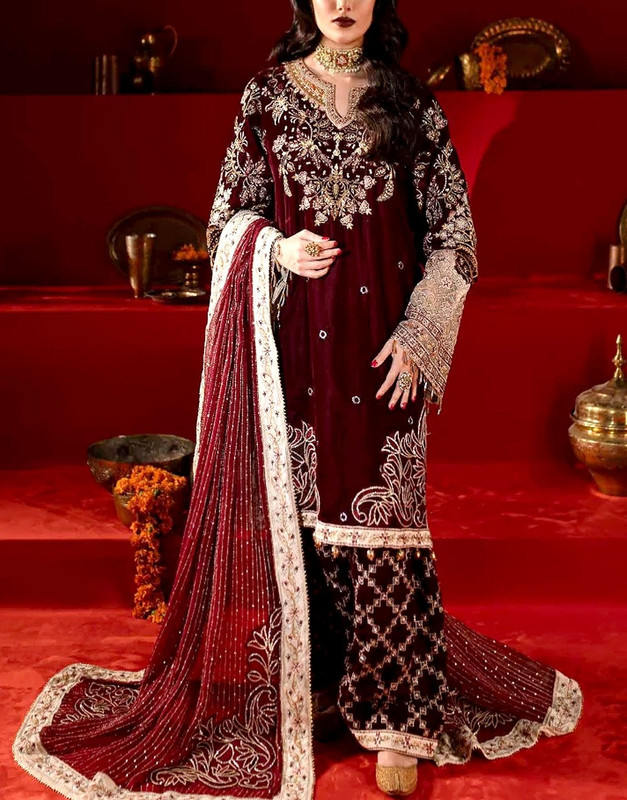
    Luxurious Heavy Embroidered Velvet Suit | 4-Side Chiffon Dupatta & Silk Trouser

    Luxurious Heavy Embroidered Velvet Suit | 4-Side Chiffon Dupatta & Silk Trouser

    PKR 9450

    Elegant Dhanak Winter Dress with Kotrai Shawl – Unstitched Embroidered Outfit for Casual & Formal Wear

    Elegant Dhanak Winter Dress with Kotrai Shawl – Unstitched Embroidered Outfit for Casual & Formal Wear

    PKR 4800

    Luxury Handwork Heavy Embroidered Organza Suit | Emb. Shamoz Silk Trouser

    Luxury Handwork Heavy Embroidered Organza Suit | Emb. Shamoz Silk Trouser

    PKR 7750

    Keep reading

    Related files

    Travel

    The Payment Scam File (2026-2027): How Fake Umrah Operators Take Pakistani Families' Money — the Advance-Fraud Anatomy, the Bait-Price Arithmetic and the Clawback Ladder When the Office Is Already Empty

    The forwarded message arrives after Maghrib: twelve days, everything included, at a price that gets screenshotted straight into the family group. What follows, in the worst files of every Umrah season, is not a bad package — it is an engineered payment trap: a cash 'discount' that leaves no trail, a personal mobile-wallet account instead of a registered business entity, a small 'seat-blocking' advance that makes walking away harder with every instalment, and a rotating scheme that collects from forty families to pay for twelve trips until a season slips and the office above the mobile shop is empty. This file takes apart how the money is actually taken, then hands families the arithmetic that exposes bait pricing before it bites — because the official visa stack alone is a five-figure rupee line per head before wings or beds are priced, an invoice below the sum of those floors is selling something that does not exist — and the scam's new vocabulary of fake 'DTS-licensed' screenshots, forged QR 'e-contracts' and cloned visa PDFs, each of which has a free verification move. Pakistan's Umrah Rules notified 2 July 2026 now write the protection in ink: banking channels only, written contracts, receipts kept. Pehle licence check karein, phir paisa dein — and if the money is already gone, the clawback ladder: bank dispute within days, a written demand with a deadline, the FIR and the FIA cybercrime portal, and the ministry's complaint route the [complaint ladder file](/posts/umrah-complaint-ladder-pakistan-2026-2027-mora-cdc-1966-evidence) maps in full.

    By HuziFile #873

    Read
    Travel

    The Complaint Ladder File (2026-2027): What a Pakistani Family Actually Does When Umrah Goes Wrong — the Evidence Discipline, the Written Demand, MoRA's Complaint Disposal Committee and the Saudi Side's 1966 Line

    When an Umrah goes wrong — the hotel that was 'Haram-side' turns out to be a bus ride away, the transport never materialises, the contract the agent promised appears only as a forwarded image — most Pakistani families do the one thing that guarantees nothing: they argue on the phone. This file replaces the phone argument with a ladder. Step one is the evidence discipline that decides everything before any complaint exists: the written contract, the banking-channel receipts the Umrah Rules notified 2 July 2026 now require, the preserved WhatsApp trail and the QR-scannable unified e-contract whose hotel, room type, nights and rates should be read before the balance payment, because a complaint without documents is grief, and grief has no jurisdiction. Step two is the operator in writing: a demand with booking reference, amounts, dates and a deadline, copies kept of everything sent. Step three is the ministry's own machinery — the four-member Complaint Disposal Committee headed by an officer of at least BPS-20 rank that the new rules stand up to hear complaints against verified operators, with penalties that range from listing denial to licence suspension, quota cuts and the forfeiture of a performance guarantee, plus the ministry's grievance and WhatsApp complaint channels in Islamabad. And for families still inside the Kingdom, step four: the Ministry of Hajj and Umrah's Pilgrim Care Centre at 1966 in over eleven languages round the clock, its international line and email, and the Pakistan Hajj Mission's Hajj Wing in Jeddah. Hisaab kitaboon se hota hai, yaadon se nahi — accounting is done from records, not memories.

    By HuziFile #874

    Read
    Travel

    The Visa Fee Stack File (2026-2027): Where the Umrah Money Actually Goes — SAR 535 Versus SAR 480 Versus the Operator's SAR 300, the Insurance Inside the Price, the 30-Day Entry Clock and What the Stack Never Covers

    "Visa ki fee kitni hai?" is the first question every Pakistani family asks — and the honest answer is not one number but a stack. This file takes the stack apart, layer by layer, with the published figures: the tourist eVisa priced around SAR 535 online with the mandatory medical insurance bundled in; the visa-on-arrival counter at roughly SAR 480, split into a SAR 300 visa and SAR 180 of insurance; and the classic Umrah visa routed through a licensed operator, where the visa fee sits near SAR 300 with insurance of roughly SAR 100 to SAR 180 on top — three doors, three price tags, and eligibility rules that decide which door a Pakistani passport can actually walk through, since the eVisa and arrival counter generally demand a valid US, UK or Schengen visa or residence behind them. Then the clocks that decide whether the fee is money well spent: the 30-day entry window that 2026's rules welded to visa issuance — enter within thirty days or watch the fee die on the calendar — and the one-year multiple-entry visa's 90-day cumulative balance with its fresh Nusuk package and permit before every entry. What the bundled insurance actually pays for, what it quietly excludes, and why the 15 percent VAT on services around the Kingdom belongs in the family's arithmetic. And the part every invoice eventually teaches: the stack covers the right to enter — never the bed, the bus or the booking, which is why the fee is only the ticket, not the journey. Fee sirf ticket hai, safar ki poori qeemat nahi.

    By HuziFile #875

    Read
    Travel

    Umrah Crowd Anxiety (2026-2027): The Calm File — When the Mataf Feels Like Too Much, the Five Levers That Actually Work, the Fiqh Gentler Than the Panic, and the Dua the Prophet ﷺ Taught for Fear

    Nobody writes about the pilgrim whose heart races at the green line, whose breath shortens in the packed courtyard after Isha, and who completes a perfect Umrah while feeling ashamed the entire time — as though a body's alarm system were a verdict on their faith. The crowd-anxiety file: what dense-crowd anxiety actually is — a physiology older than cities, a nervous system reading compression as danger, visiting devout grandmothers and young athletes alike, with nothing to do with weak iman. The five levers that work, in order of power — the floor choice that makes the roof and first floor the calmest worship in Makkah; the hour choice that borrows the crowd clock's quietest windows; the lane choice that keeps the outer mataf's walking space; the partner system no pilgrim abandons on day one; and the dhikr-and-breathing pairing that regulates a racing body with the remembrance the Quran says settles hearts. The fiqh gentler than the panic — stepping out of tawaf and resuming is permitted, so recovery never means abandoning worship. The pre-trip preparation — practice crowds at home, the doctor conversation, medication carry rules, and the Madinah-first routing that eases the arrival. And the taught dua for fear itself.

    By HuziFile #856

    Read
    Travel

    The Cargo File (2026-2027): Shipping Dates, Attar and Prayer Mats Home From Makkah — Carry Versus Send, the Per-Kilogram Reality and the Boxes That Arrive After You Do

    The last two days of every Umrah trip follow the same script: the family buys more than any baggage allowance will hold — ajwa and khudri dates by the carton, prayer mats, abayas, gifts for a street back home — and then discovers that the airline's excess-baggage rate at the check-in counter is the most expensive freight in the region. The alternative nobody explains properly is the cargo ecosystem around Makkah's hotel districts: shipping merchants who pack and dispatch boxes to Pakistan daily, courier counters from SMSA and Saudi Post inside the city, and a simple rule of thumb — heavy and sturdy goes cargo, light and precious goes carry-on. This file explains what can be sent and what cannot: dates ship beautifully by the five-kilo box while Zamzam never travels as cargo, staying inside the airport's five-litre rule; attar is frequently refused because perfumes are flammable liquids in air freight; and the pricing reality — per-kilogram rates quoted in bands that shift with season and weight, with a recent documents-only parcel to Pakistan costing about SAR 170 and taking around a week, and heavier boxes priced by the kilo, which is exactly why the quote must be taken in writing with a tracking number before the box is sealed. Plus the timing trap — boxes shipped in the last forty-eight hours arrive after you do — and the customs distinction between accompanied baggage and a parcel, which are two different regimes entirely. Saman aap ke baad ghar pohanchega — plan the shipment the day you land, not the day you leave.

    By HuziFile #872

    Read
    Travel

    How Umrah Agencies Actually Earn (2026-2027): The Commission Anatomy of a Pakistani Family's Package — Wholesale Rooms, Coach Margins, and Why the Same Hotel Differs by Thousands

    Two agencies quote the same Makkah hotel for the same dates, and the difference runs into thousands of rupees — and the family assumes one of them is lying. Usually neither is: the gap sits inside the anatomy of a package, in layers most operators never itemise. The room cost, where an agency holding a wholesale allocation for the season pays a different rate from one buying retail through a reseller. The transport layer, where coach class and route decide both comfort and margin. The catering and ziyarah layer. The service and documentation layer, visa handling and group data discipline that quietly decides whether the visa clears. And the margin plus risk buffer, the only truly discretionary lines. Two rules now drag this anatomy into the open: Saudi Arabia's unified electronic contracting system, announced 11 May 2026 for the 1448 season, which lands every hotel, transport, catering and ziyarah booking as one QR-verifiable e-contract with itemised blocks; and Pakistan's own Umrah Rules notified in July 2026 under the Hajj and Umrah Regulation Act 2024, which restrict operations to DTS- and IATA-licensed Umrah Group Organisers on MoRA's attested list, push payments into banking channels instead of cash, and oblige families to hold written contracts and receipts they can complain with. This file explains the five layers, why identical hotels price differently, what the 2026 rules force, and when DIY booking genuinely wins over an operator.

    By HuziFile #870

    Read
    Back to the archive