The independent file on technology, travel & lifeFrom Pakistan, for everywhere
Huzi Blogs.
The ArchiveSectionsSearch

Planning a trip? HTG Travels — flights, visas, hotels & Umrah, handled properly.

WhatsApp +92 317 5054959
Huzi Blogs.

An independent file on technology, travel and life — long-form guides written plainly, from Pakistan, for everywhere.

ShopMeet the Creator

Sections

  • Travel
  • Technology
  • Lifestyle
  • Programming
  • Sports
  • Linux
  • All sections

The Desk

  • The Archive
  • Search the file
  • Disclaimer & Data Privacy Policy
  • A project of huzi.pk

© 2026 blogs.huzi.pk — All rights reserved.

Set in Playfair Display & Inter

    HomeTravelStory
    Travel

    The UK's Contactless eGates File (2026–2027): Face-First Border Checks Explained for Pakistani Families — Which Passports Walk Through Without Lifting a Document, Which Ones Still See an Officer, the Airport-by-Airport Rollout to Early 2027, and the Split-Queue Reality of a Dual-National Family

    H

    By Huzi

    File #960 · 4 min read

    The newest gate at the UK border does not want your passport. It wants your face. Since 6 October 2026, Britain has been switching its airport eGates to contactless facial comparison — a camera, a database check, and a door that opens without a document ever touching a reader.

    The quick answer: contactless eGates are live now at Birmingham and East Midlands, with a phased rollout to Bristol, Cardiff, Edinburgh, Gatwick, Glasgow, Heathrow, London City, Luton, Manchester, Newcastle and Stansted — every UK airport by early 2027. The technology suits UK, EU, Australian, Canadian, Icelandic, Japanese, Liechtenstein, New Zealand, Norwegian, Singaporean, South Korean, Swiss and US citizens; Irish citizens and Registered Traveller members can use ordinary eGates but not yet the contactless lane. For Pakistani passport-holders on visit or student visas, nothing changes: visa nationals have never used UK eGates and still see a Border Force officer — the interview discipline the UK visit visa file prepares you for. And everyone, gate or no gate, must still carry a valid physical passport.

    How the contactless check actually works

    • You enter one person at a time; the gate's camera takes a picture.
    • Facial comparison technology verifies the face against immigration, travel and passport records.
    • If the checks pass, the gate opens — no passport placed on the reader.
    • If they do not, you are told to place the passport on the reader, or an officer takes over — the same fallback that has always existed.

    The Home Office says the change makes the average eGate journey up to 25 percent quicker, with all underlying immigration and security checks unchanged. It is speed, not leniency — a distinction that matters to anyone hoping the gate replaces paperwork. It does not.

    Who walks through — and who never did

    The honest table for a Pakistani family landing at Heathrow:

    • British Pakistani dual nationals travelling on UK passports — contactless-eligible once their airport is switched on; the dual-passport file explains which passport each family member should hold for the whole journey.
    • Pakistani visit-visa holders — always the officer desk, exactly as before: documents, invitation letter and answers ready, per the refusal and reapplication playbook.
    • Pakistani student-visa holders — same officer route; the CAS, funds and course answers live in the student visa file.
    • Travellers in transit landside — officer checks still govern the visa side of a self-transfer, the trap the transit-rules file maps airport by airport.

    The split-queue family plan

    The practical reality of a Midlands or London landing: one part of the family clears in seconds, the other queues for an officer. Agree the meeting point landside before landing — the arrivals hall cafe, the information desk — because a phone that is still on airplane mode cannot coordinate anything. The officer-queue family should keep documents in hand luggage, not checked baggage; the gate-family should still carry passports because the technology can fall back to the reader at any time.

    • UK ke airport par ab face scan wale eGates aa rahe hain — Birmingham aur East Midlands par chal rahe hain, early 2027 tak har airport. Lekn yaad rakhein: British, EU, America, Canada jaisi passports hi isay use kar sakti hain. Pakistani visit ya student visa par aane walon ki interview waisi hi rahe gi — documents haath ki bag me rakhein, family ke saath meeting point pehle tay karein, aur passport phir bhi saath le kar chalein.

    Britain teaches a gate to recognise a face in half a second, while the world has spent years refusing to look at Gaza at all — a place where being seen by the right eyes could mean bread, and being seen by the wrong ones means a target. Ya Allah, let Palestine be looked at with mercy, finally, and by everyone at once. Sudan's displaced know the wrong kind of watching: checkpoints that stare, lists that decide, skies that follow families home — Ya Rab, give Sudan eyes that guard its people instead of hunting them.

    We actually respond, twenty-four hours, no hidden charges — and UK-bound families get the split-queue plan in writing: who carries which document, which lane each passport uses, and the questions officers still ask, rehearsed before anyone flies. HTG Travels — WhatsApp +92 317 5054959.


    Presented by

    HTG Travels — Plan the Trip, Skip the Runaround

    Flights, visas, Umrah packages and Hunza–Skardu tours, handled end to end from our licensed Sialkot desk. Real fares, hotel names in writing, and a human who answers — before you pay a rupee.

    Flights & rebooking Visa files Umrah 2026–27 Northern tours
    Visit htg.com.pkWhatsApp +92 317 5054959

    Sialkot, Pakistan · Licensed agency · Fast quotes on WhatsApp


    You Might Also Like

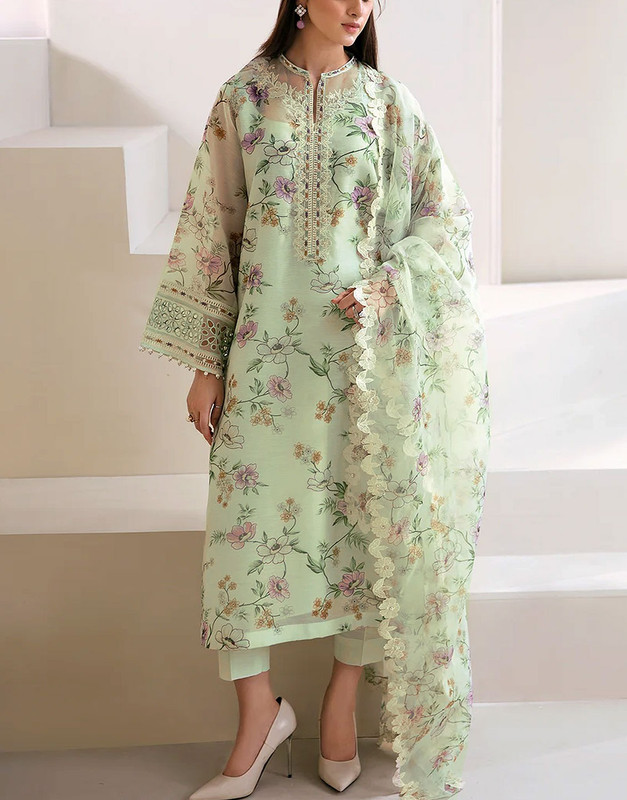
    Mint Green Embroidered Chiffon Party & Wedding Dress – Unstitched Luxury Outfit with Handcrafted Neckline

    Mint Green Embroidered Chiffon Party & Wedding Dress – Unstitched Luxury Outfit with Handcrafted Neckline

    PKR 8000

    Premium Digital All-Over Print Lawn 3-Pc Suit with Voil Lawn Dupatta (EID Collection)

    Premium Digital All-Over Print Lawn 3-Pc Suit with Voil Lawn Dupatta (EID Collection)

    PKR 3900

    Trendy Embroidered Lawn 3-Piece Suit with Printed Organza Dupatta (Summer Casual)

    Trendy Embroidered Lawn 3-Piece Suit with Printed Organza Dupatta (Summer Casual)

    PKR 4500

    90/70 Quality Schiffli Embroidered Lawn Suit 3-Pc | Digital Printed Chiffon Dupatta (2025)

    90/70 Quality Schiffli Embroidered Lawn Suit 3-Pc | Digital Printed Chiffon Dupatta (2025)

    PKR 4900

    Fancy Embroidered EID Lawn Suit 3-Pc (New) | Embroidered Khaddi Net Dupatta

    Fancy Embroidered EID Lawn Suit 3-Pc (New) | Embroidered Khaddi Net Dupatta

    PKR 5550

    Keep reading

    Related files

    Travel

    The UK ETA File for Pakistani Dual-Passport Families (2026–2027): Which Passport to Fly On, the £20 Authorisation Now Gating Every Non-Visa Entry, the Full Enforcement Running Since 25 February 2026, the Transit Trap at Heathrow and Manchester, and Why the Wrong Passport Choice Can Sink a Trip That Was Perfectly Legal on Paper

    A Pakistani-origin family flying to Britain is often three households in one booking: a son on a British passport, a grandmother on a green passport, a cousin on a US passport — and since 25 February 2026 the UK runs a hard rule that no ETA means no boarding for visa-free nationalities. This file separates the three routes: British and Irish citizens never need an ETA; Pakistani passport holders always need the visit visa, never the ETA; and the family member on an American, Canadian or European passport needs the £20 ETA, applied for in the UK ETA app, linked to the same passport used at boarding. Includes the transit rule that catches connecting families at Heathrow and Manchester every week.

    By HuziFile #956

    Read
    Travel

    The Departure-Morning File (2026–2027): Getting an Upcountry Pakistani Family to the Airport at 3 a.m. Without Losing a Passport or an Aunt — the Motorway Timing Math, the Daewoo and Green Line Alternatives, Where the Car Sleeps While You Are in Makkah and the Elder's Buffer That Absorbs Every Delay

    The Umrah file every family writes on the back of a taxi receipt: the last two hundred kilometres between a sleeping house in Sahiwal, Gujranwala or Abbottabad and the departure gate at Islamabad, Lahore or Karachi. The timing math done honestly — why an international flight from upcountry means leaving home four to five hours before boarding, what the motorway at night actually averages, the chai stop that is planned rather than hoped for, and the one flat tyre that must be assumed. The transfer options compared for luggage maths and elder maths — the family car with a driver who returns, self-drive with airport parking whose rates you confirm at the plaza rather than guess at, the Daewoo coach ceiling on eight suitcases, the Green Line and Khyber Mail sleeper route into Karachi. Where the car itself sleeps during the two Umrah weeks — the garage plus the neighbour's eye the leaving-home file already arranged, the parking tier, the driver-drop option. The night-before discipline: suitcases numbered at the door, documents in one belt pouch, phones charged, the convoy headcount ritual. And the reminder that travels with every dawn departure: the families of Gaza leaving homes with keys they will never use again, and Sudan's 3 a.m. buses of displacement.

    By HuziFile #906

    Read
    Travel

    The Al-Sheeb Closure File (2026–2027): Iraq Shut the One Land Route Pakistani Ziyarat Families Had — the 21 October Crossing Closure That Suspended Passengers and Cargo, the Ministry's 30 October Advisory Naming the Only Authorised Door, the Baghdad-and-Najaf-Airport Rule That Replaces the Bus, the Organiser Instruction Nobody Selling a December Trip Can Ignore, and the Questions a Family Asks Before Paying for Karbala Now

    A border stamp decides a ziyarat faster than a visa does. This is the closure file for Pakistan's Iraq-bound families: Iraq shutting the Al-Sheeb crossing with Iran on 21 October 2026 for a security review that suspended passenger and commercial traffic until further notice, the Ministry of Religious Affairs' 30 October advisory reporting the Pakistan Mission in Baghdad's finding that Al-Sheeb was the only authorised land route for Pakistani pilgrims travelling to Iraq via Iran, that no alternative land route can be used without prior approval from the Iraqi government, that entry into Iraq currently runs only through Baghdad and Najaf airports, and that all ziyarat group organisers have been instructed not to send pilgrims toward the closed crossing — the rerouting table that replaces the overland leg with an airport arrival at Najaf or Baghdad, the questions that separate an operator rebuilding itineraries from one still selling a road that cannot be driven, the Mashhad-pairing families who must re-plan the two-country file, and what changes for the Arbaeen walker whose walk now starts at an airport instead of a border.

    By HuziFile #923

    Read
    Travel

    The Date-Change File (2026–2027): What Pakistani Families Actually Do When Umrah Dates Move After the Visa Is Printed — the 30-Day Entry Clock That Turns a Postponement Into a New Application, the Hotel Booking That Has to Shift First, the Flight Rebooking Chain, the Permit That Follows the Booking and the Order of Operations That Saves the Most Money

    "Dates badalni hain" — the sentence that reaches every operator's desk within a week of any visa being issued: a death in the family, the son's leave refused, the exam board moved the papers, the doctor said not this month. This is the file for the moment the calendar moves after the paperwork has already been printed. The clock that decides everything: the single-entry Umrah visa must now be entered within thirty days of issuance — a postponement that slides past that window does not postpone the visa, it kills it, and the application starts again. The order of operations that saves money: hold the flight before it auto-cancels, shift the hotel booking that anchors the whole file, let the permit follow the booking, then rebook the flights — in that order, with the flight-change chain handed to the refunds file. The postponement decision done as arithmetic: the visa fee, the hotel cancellation window and the flight change fee weighed against each other instead of feared together. And the calm that travels with it: istikhara before the change, the Hijri drift that quietly moves the crowded weeks, and the reminder that Palestine's families hold keys dated 1948 while Sudan's hold postponed weddings neither chose to postpone.

    By HuziFile #907

    Read
    Travel

    Tawaf Floors at the Grand Mosque (2026–2027): The Levels File — Ground Mataf, First Floor or the Roof, and Where Pakistani Families Should Actually Walk

    Every family reaches the escalators at the Grand Mosque and freezes — ground floor, first floor, or the roof? — and nobody has briefed them on what each level actually trades. This is that briefing for 2026–2027: the tawaf counts identically from every floor of the Haram, so the choice is pure strategy — crowds, knees, wheelchairs, heat and pace. The ground mataf: closest to the Kaaba and the green light line, the densest circuits at peak hours, the slower-paced paths and wheelchair lanes reserved on the ground level, and the lane discipline that keeps pilgrims out of each other's way. The first floor and above: reached by the Ajyad-side escalators, the family default that halves the crowd density, and the third floor's dedicated circular walking track that gives elders an unhurried lap. The roof: the calmest, widest circuits of all, the summer-night tawaf venue, and the level where the Ramadan-period service has stationed help for elderly and disabled pilgrims. The arithmetic nobody does — upper floors stretch each circuit slightly longer, so seven upstairs laps walk more total distance than seven at the mataf. The escalator queues after every fard prayer that eat more time than the level saves. The pairing of floor choice with the crowd clock's quiet windows, the wheelchair routes, and the honest answer for parents with strollers, elders with knee pain, and first-timers who want the green line beside their own feet.

    By HuziFile #839

    Read
    Travel

    Pakistan's Interest-Free Hajj Savings Plan: The File Every Family Saving Rupees Must Read — PM Shehbaz Sharif's 9 October 2026 Approval, the MoRA-Finance-CDNS Joint Proposal, Monthly Digital Deposits, Family Transfers and Withdrawals Without Deductions, Rules Due Within Two Months, the Promise of an Umrah Savings Scheme Too — and What It Actually Changes for a Rs 1.2 Million Hajj

    The biggest money news for Pakistani pilgrims in years arrived on 9 October 2026, and almost nobody understood what it was. Prime Minister Shehbaz Sharif approved the development of an interest-free, Shariah-compliant Hajj Savings Plan — a joint proposal from the Ministry of Religious Affairs, the Ministry of Finance and the Central Directorate of National Savings that would let families make regular monthly deposits through digital channels, choose their own savings period, transfer the pot to family members, and withdraw without deductions. The government has ordered the scheme's rules drafted within two months, and asked that similar savings schemes be designed for Umrah and other religious journeys. This file explains what is actually approved, what is still unwritten — eligibility, terms, profit treatment and launch date are all still open — and what a family saving toward a Rs 1.2–1.3 million Hajj should do while the paperwork catches up to the promise.

    By HuziFile #968

    Read
    Back to the archive