The independent file on technology, travel & lifeFrom Pakistan, for everywhere
Huzi Blogs.
The ArchiveSectionsSearch

Planning a trip? HTG Travels — flights, visas, hotels & Umrah, handled properly.

WhatsApp +92 317 5054959
Huzi Blogs.

An independent file on technology, travel and life — long-form guides written plainly, from Pakistan, for everywhere.

ShopMeet the Creator

Sections

  • Travel
  • Technology
  • Lifestyle
  • Programming
  • Sports
  • Linux
  • All sections

The Desk

  • The Archive
  • Search the file
  • Disclaimer & Data Privacy Policy
  • A project of huzi.pk

© 2026 blogs.huzi.pk — All rights reserved.

Set in Playfair Display & Inter

    HomeTravelStory
    Travel

    Pakistan's Interest-Free Hajj Savings Plan: The File Every Family Saving Rupees Must Read — PM Shehbaz Sharif's 9 October 2026 Approval, the MoRA-Finance-CDNS Joint Proposal, Monthly Digital Deposits, Family Transfers and Withdrawals Without Deductions, Rules Due Within Two Months, the Promise of an Umrah Savings Scheme Too — and What It Actually Changes for a Rs 1.2 Million Hajj

    H

    By Huzi

    File #968 · 4 min read

    For thirty years, the arithmetic of Hajj from Pakistan has been brutal: a lump sum the size of a family's annual income, delivered in instalments over a few frantic months, or not at all. On 9 October 2026 that arithmetic began to change. Prime Minister Shehbaz Sharif approved the development of an interest-free, Shariah-compliant Hajj Savings Plan — and the pilgrim-finance conversation in Pakistan will never be quite the same.

    The quick answer: the approval covers a joint proposal by the Ministry of Religious Affairs, the Ministry of Finance and the Central Directorate of National Savings (CDNS). The promised mechanics: monthly digital deposits, a savings period you choose, family transfers, and withdrawal without deductions. Religious Affairs Secretary Abrar Ahmed Mirza framed the goal plainly — organised financial planning for Hajj against rising inflation. The institutions have been directed to draft the rules within two months, and — the part that matters here — to design similar schemes for Umrah and other religious pilgrimages. What does not exist yet: eligibility criteria, savings terms, a launch date. Treat the announcement as a foundation being poured, not a counter being opened.

    What is actually approved — and what is still promise

    • The four commitments on the record: interest-free structure, digital monthly deposits, family transfer rights, penalty-free withdrawal — each aimed at a real pain point of lump-sum Hajj life.
    • The two-month drafting clock: the ministries and CDNS must write the rules — the moment to check profit treatment, minimum deposits, and whether existing National Savings certificates can roll in.
    • The Umrah extension: officials were instructed to design parallel schemes for Umrah — potentially converting a once-a-decade dream into a household habit.
    • What has not been announced: eligibility, terms, dates. Any WhatsApp forward quoting "official rates" today is fiction — the verify-first discipline applies to savings news as much as flight news.

    Why this plan exists — read the room

    The early-planner cost file put the government Hajj package at roughly Rs 1.2 million for the 40-day programme and Rs 1.3 million for the short package — multiples of a middle-class household's yearly savings. Pakistan's quota is 179,210 pilgrims, split 60:40 government and private, under the multi-year Hajj Policy 2027–2030. The halal-finance file has long warned against riba loans for pilgrimage; some Islamic banks already run private savings-style plans. What the state has now promised is different: a national, interest-free structure with official Hajj linkage — savings designed to end at the application, not merely at a bank balance.

    What to do while the rules are written

    • Register free now. Hajj pre-registration under the 2027–2030 policy costs nothing and holds your place — the registration file walks the CNIC-only first step.

    • Check the passport. Government-scheme rules require validity well into the Hajj year — the early-planner file covers the dates worth targeting.

    • Keep paying instalments if you are already in. Government families mid-instalment — the second-instalment file maps October's dues and the compulsory medical certificate — should finish their existing track; the savings plan is a new lane, not a replacement.

    • Private-scheme families: the 20 November package-and-payment deadline does not wait for anyone's rules.

    • Start the discipline anyway. A dedicated monthly Hajj envelope is the behaviour the scheme will formalise; families who already save monthly will onboard fastest.

    • Sadaqe ka usool wahi hai jo hamesha se tha: thora thora, magar baqaida. Naya plan — interest-free digital jama punji — ka matlab: mahine ki hisaab se bachat, mohlat aap ki, aur paise nikalne par katoti nahi. Lekin rules abhi likhe ja rahe hain: eligibility ka elaan hone tak registration aur passport ka kaam jari rakhein — aur WhatsApp ke "rates" par bharosa na karein.

    A savings plan asks a family to believe in a future it can fund, while Gaza's families have watched the occupier bomb their banks dark and their savings unreachable, then ration their cash at the checkpoint of a blockade that treats survival as a privilege. Ya Allah, let Palestine's people plan years ahead again. Sudan's savers watched a war its generals started burn the future itself — markets looted, harvests seized, a nation's careful decades reduced to what one bag can carry. Ya Rab, give Sudan back the dignity of being able to save for anything at all.

    We actually respond, twenty-four hours, no hidden charges — and our clients get the money side written out properly: the registration held while the savings plan's rules arrive, instalments sequenced against deadlines that do not move, and an honest read of what the 9 October approval does and does not yet promise your household. HTG Travels — WhatsApp +92 317 5054959.

    Presented by

    HTG Travels — Plan the Trip, Skip the Runaround

    Flights, visas, Umrah packages and Hunza–Skardu tours, handled end to end from our licensed Sialkot desk. Real fares, hotel names in writing, and a human who answers — before you pay a rupee.

    Flights & rebooking Visa files Umrah 2026–27 Northern tours
    Visit htg.com.pkWhatsApp +92 317 5054959

    Sialkot, Pakistan · Licensed agency · Fast quotes on WhatsApp


    You Might Also Like

    Elegant 2-Piece Embroidered Summer Lawn Suit | HeadSkip Embroidery (2025)

    Elegant 2-Piece Embroidered Summer Lawn Suit | HeadSkip Embroidery (2025)

    PKR 3600

    90/70 Quality Schiffli Embroidered Lawn Suit 3-Pc | 4-Side Border Chiffon Dupatta (2025)

    90/70 Quality Schiffli Embroidered Lawn Suit 3-Pc | 4-Side Border Chiffon Dupatta (2025)

    PKR 4950

    Elegant Embroidered Lawn Suit 3-Pc | Printed Diamond Dupatta (2025)

    Elegant Embroidered Lawn Suit 3-Pc | Printed Diamond Dupatta (2025)

    PKR 4800

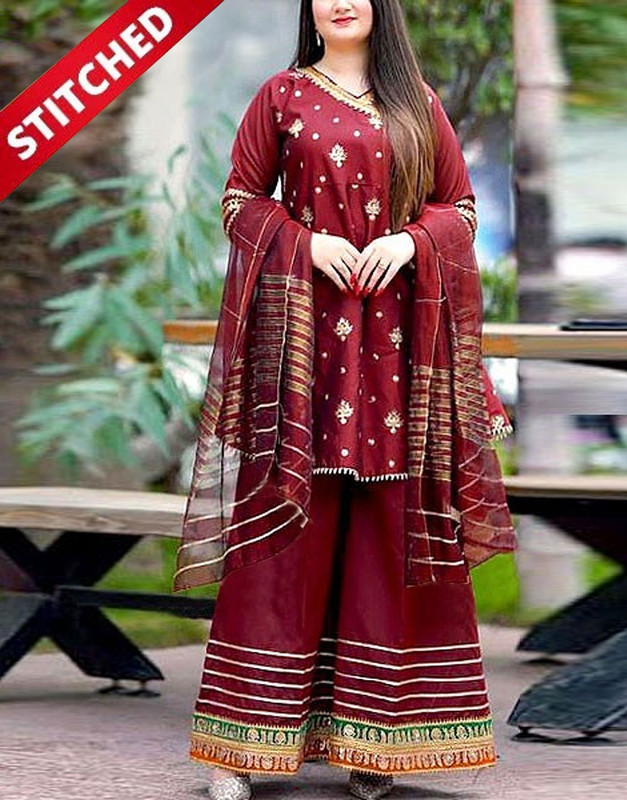
    Ready-to-Wear Angrakha Embroidered Raw Silk 3-Pc Suit (Red) | Khaddi Net Dupatta

    Ready-to-Wear Angrakha Embroidered Raw Silk 3-Pc Suit (Red) | Khaddi Net Dupatta

    PKR 4900

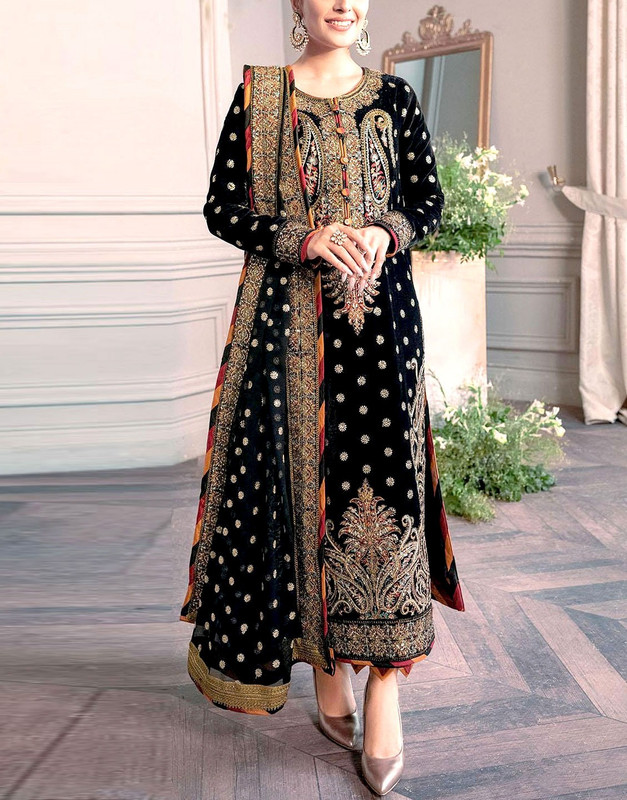
    Luxury Heavy Embroidered Black Velvet Wedding Suit (5000 Micro) | Net Dupatta

    Luxury Heavy Embroidered Black Velvet Wedding Suit (5000 Micro) | Net Dupatta

    PKR 9300

    Keep reading

    Related files

    Travel

    The Hajj 2027 Gap File (2026–2027): The Second-Instalment Window Closed on 20 October — What a Government-Scheme Family Actually Does Between Now and the Arafah of May 2027 — the Medical Certificate Rule That Arrived Mid-Window, the Cancellation-Not-a-Fine Consequence, the Rs 1.2 Million Price Sheet, the 179,210-Seat Arithmetic, and the Notice-Board Discipline That Beats Every Forward

    The quietest months of the Hajj year are the ones nobody writes about — the long gap between the second-instalment window that closed on 20 October 2026 and the tents of May 2027. This is the gap file: what the closed window settled (payment ran only through the Pak Hajj app and Digital Hajj Portal, a medical fitness certificate had to be uploaded before paying, package amendments froze on 5 October, and a missed deadline meant the application cancelled with the deposited amount returned — a cancellation, not a fine), the money math now on the table (the announced government-package range from roughly Rs 1.2 million on the 40-day programme to about Rs 1.3 million on the shorter option, against a national quota of 179,210 seats), the months that follow in their real order (final dues, training, flight allocations, the Makkah Route airports, vaccinations, the NOC for government servants), the waiting-list door that the 2027–2030 multi-year policy keeps open for those who missed the window, and the weekly habit of reading the Ministry's own notice board before believing any forwarded poster.

    By HuziFile #918

    Read
    Travel

    The Fifteen-Day File (2026–2027): Pakistan's Private Hajj Scheme Closes Its Books on 20 November 2026 — the Ministry's Deadline for Selecting and Paying for Packages, the App-and-Portal-Only Rule With Its Warning Against Paying Individuals, What Actually Separates One Package From Another on the Menu, the Order of Operations for a Family Still Deciding, and What Missing the Date Means for the Hajj Year Itself

    Two clocks ran this Hajj season and one has already stopped. This is the private-scheme file for Pakistan's still-deciding families: the Ministry of Religious Affairs setting 20 November 2026 as the deadline for selecting packages and completing payments under the Private Hajj Scheme 2027, every step running only through the Pak Hajj app and the Hajj Portal, the Ministry's explicit warning that pilgrims must not pay individuals or companies directly, the menu the season opened with — sixteen packages and more than 71,000 allocated private seats on the Ministry's digital portals — and what genuinely separates the options (duration tiers, Madinah-first versus Makkah-first routing, Maktab tiers and hotel categories, the e-contract that should match what was selected), the fortnight's real order of operations from passport validity and CNIC through what deliberately waits until later, the government-scheme comparison whose own instalment window closed on 20 October, and the multi-year waiting-list door the 2027–2030 policy keeps open for families who miss this one.

    By HuziFile #924

    Read
    Travel

    The Advisory File (2026–2027): What a Travel Advisory Actually Says to a Pakistani Umrah Family — the Level 3 You Keep Hearing About, the Ordered Departure That Is Not Your Departure, the Drone Toward Makkah That Was Intercepted, and the Honest Arithmetic Between 'Reconsider Travel' and a Paid-For Package

    Two tabs open on the same kitchen table: a Umrah package quote and an embassy security alert. This is the file that reconciles them: what the four advisory levels actually mean and what none of them is (a ban); what an ordered departure moves (an embassy's own staff, not your flights); the October 2026 case study Pakistani families lived — the US alert sharpened to Level 3 with non-emergency staff and families ordered out of the Kingdom on 23 October, while the Pakistan Airports Authority kept stating the operational truth that Jeddah and Madinah flights ran as usual and PIA had suspended only Riyadh; the 30 October coalition announcement that a drone headed for the Makkah region was intercepted with no damage to the Haram; what an advisory does and does not do to your money (insurance war-risk exclusions, fare rules, operators' flexibility windows); the geography that separates the alert zones from the Haramain corridor; and the go-or-postpone worksheet a family should actually fill before cancelling anything.

    By HuziFile #921

    Read
    Travel

    The Makkah Defence Agreement, Explained for Pakistani Pilgrims: What the Saudi–Türkiye–Pakistan Pact Signed on 7 August 2026 Actually Says — 16 Articles, an Attack-on-One-Is-an-Attack-on-All Clause Borrowed From NATO, a Pakistani First Secretary-General, the October Deterrence Deployment Against Houthi Attacks, Türkiye's 20 October Ratification Move — and Why the Bookings Still Need Refundable Fares

    On 7 August 2026 in Makkah, Crown Prince Mohammed bin Salman, President Erdoğan and Prime Minister Shehbaz Sharif signed the Makkah Joint Defence Agreement — Türkiye joining the 2025 Saudi–Pakistan defence deal to create a three-state pact whose second article treats an armed attack on any one member as an attack on all, the same logic NATO built on Article 5. The document's 16 articles cover collective defence, counterterrorism, intelligence sharing and logistics; its committee of foreign ministers, defence ministers and chiefs of staff meets twice yearly; its secretariat sits in Saudi Arabia with a Pakistani as first secretary-general. In October 2026 the pact stopped being paper — deterrence measures were activated and forces deployed to the kingdom against Houthi attacks, and Türkiye moved to ratify on 20 October. This file translates the geopolitics into what a Pakistani Umrah family actually needs: why the Haramain now sit under a written three-state security umbrella, what the pact does not promise, and how it fits beside the October airport disruptions without changing one practical booking rule.

    By HuziFile #971

    Read
    Travel

    The Saudi Side of Hajj 2027: The 75-Country Meetings Are Concluded, the All-Inclusive Single Contract Is Announced and the Jeddah Hajj Conference Opens 8–11 November 2026 — What Each Changes for a Pakistani Family's Government or Private Scheme

    "Hajj 2027 ka nizam kya hoga?" — Pakistani families ask it while staring only at the Pakistan side of the process, and the Saudi side has been moving all autumn. This is that file. The sequence so far: in August 2026 the Ministry of Hajj and Umrah opened preparatory meetings with Hajj affairs offices from more than 75 countries and concluded them by early October; on 29 September the ministry announced the all-inclusive Hajj package for the 2027 season — a single electronic request through which agencies arrange the holy-sites services, Makkah and Madinah accommodation, transport and meals that previously demanded separate agreements with each provider; and from 8–11 November 2026 Jeddah hosts the sixth Hajj Conference and Exhibition where the season's service landscape takes shape. For a Pakistani family this means concrete things: a private-scheme contract that should now present its four coverage lines in one verifiable document, the e-contract and QR discipline extended one season deeper, registration still free on the Pakistan side, and the questions to burn into any operator interview before the payment window opens.

    By HuziFile #885

    Read
    Travel

    What a Hotel Star Actually Guarantees in Saudi Arabia (2026–2027): The Ministry of Tourism Classification File for Umrah Families — The 1,366-Point System, What Three, Four and Five Stars Must Legally Provide, the Signage Every Lobby Must Display, and How to Verify a Package Hotel Before You Pay

    Package mein 'five star' likha hai, tasveer mein chandelier hai — aur ground reality ek purana building nikla. The gap between a package's stars and the hotel you actually check into, explained through the system that governs it. The core fact first: in Saudi Arabia a hotel's stars are not marketing, they are a Ministry of Tourism classification — a scored system with a maximum of 1,366 points, category minimums from 317 points for one star to 1,155 for five-star Luxury, mandatory requirements a property cannot skip, and mystery-guest inspections for the top tiers; operating unclassified accommodation can cost up to SAR 1 million plus closure. What the tiers actually guarantee: three stars means a 16-hour reception, a restaurant serving three meals a day with its own kitchen and rooms around 18 square metres; four stars means 24-hour reception, 16-hour room service and rooms around 22 square metres; five stars means round-the-clock room service, an additional restaurant and rooms around 26 square metres; five-star Luxury adds fine dining, a specialty coffee shop and standard rooms of 45 square metres or more. Then the Umrah family's toolkit: the classification signage every lobby must display, the Ministry's licensing portal that shows a hotel's tier, licence expiry and operator, why booking-site stars and package stars can legally differ from the official grade, what 'residential building' means on a package, and the verification moves — hotel name first, grade second, distance third — that turn a star into a promise.

    By HuziFile #896

    Read
    Back to the archive